Zero-Hallucination Healthcare AI with LangGraph
Discover how medical & dental practices deploy 100% accurate, HIPAA-compliant AI agents using LangGraph state machines grounded in verified EHR databases.
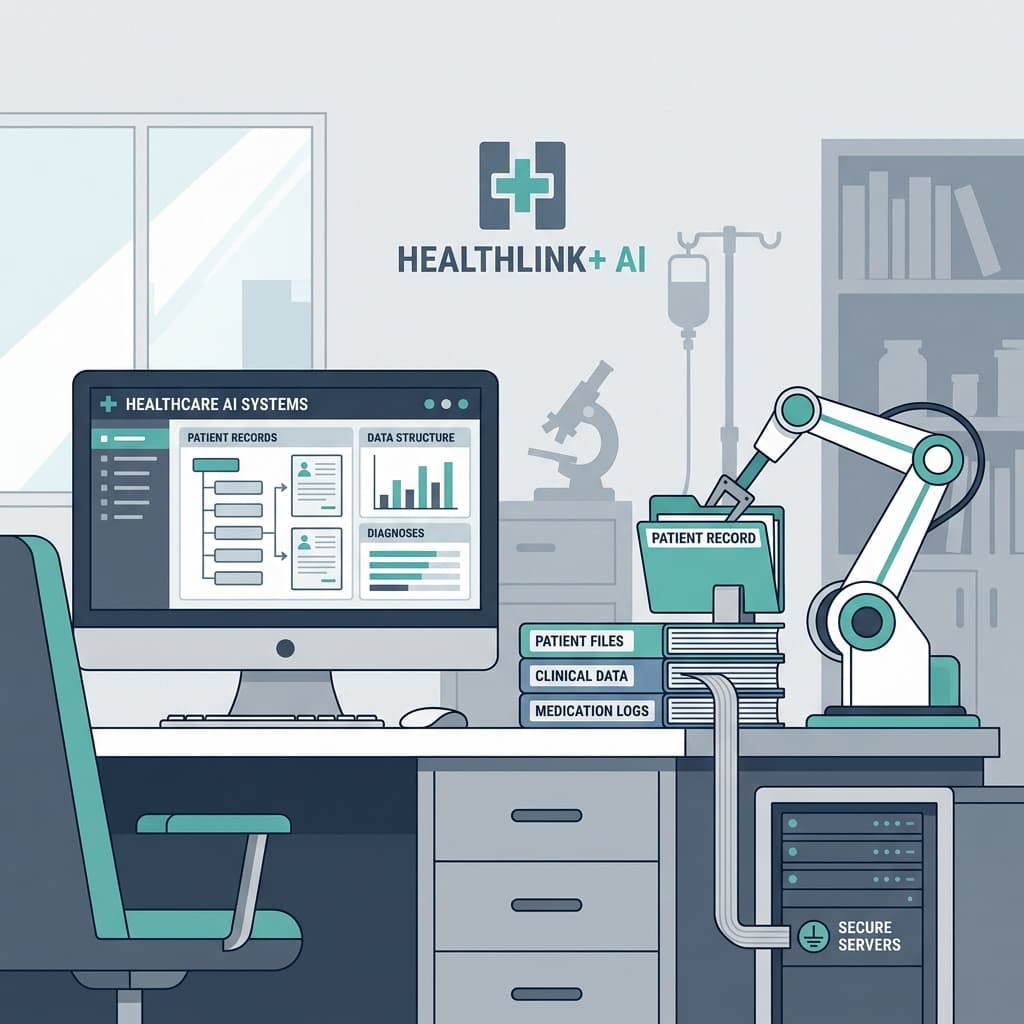
The healthcare and dental industries stand at a critical crossroads. On one hand, administrative burnout is at an all-time high, with clinics losing up to 25% of potential patient bookings to simple missed calls and delayed responses. On the other hand, the standard probabilistic nature of Large Language Models (LLMs) poses a severe risk. In clinical settings, a hallucination rate of even 1% is unacceptable. When patient health, appointment logistics, or medical compliance is on the line, AI agents must deliver 100% data accuracy.
This is where deterministic AI grounding comes in. By leveraging advanced orchestration tools like LangGraph and anchoring agent reasoning in verifiable data sources (such as Electronic Health Records (EHRs) and clinic policy documents), we can deploy healthcare assistants that are both autonomous and absolutely accurate. In this technical deep dive, we will explore the architecture behind building a zero-hallucination AI assistant, drawing from our experience building systems like the 24/7 AI Healthcare Receptionist and the Omni Channel Chatbot for Pathology Clinics.
The Structural Vulnerability of Standard RAG
Many developers attempt to solve hallucinations using basic Retrieval-Augmented Generation (RAG). In a standard RAG pipeline, a user query is converted into a vector embedding, matched against a vector database of documents, and the top-k chunks are stuffed into the LLM context. While this works well for generic question-answering, it fails in healthcare for three major reasons:
- Semantic Drift: In medicine, minor terminology differences carry major clinical implications. A standard vector search might confuse "type 1 diabetes" with "type 2 diabetes" because they share high semantic similarity, leading to incorrect guidance.
- Logical Disconnection: Standard RAG does not verify if the LLM's final response actually matches the retrieved documents. The model can still introduce "imagined" details when synthesizing the output.
- Lack of State Management: Patient interactions are multi-step processes. If a patient is triaged over voice or chat, the system must retain context, query database states, handle validation steps, and dynamically route the call—something linear RAG pipelines cannot do.
The Solution: LangGraph Orchestration
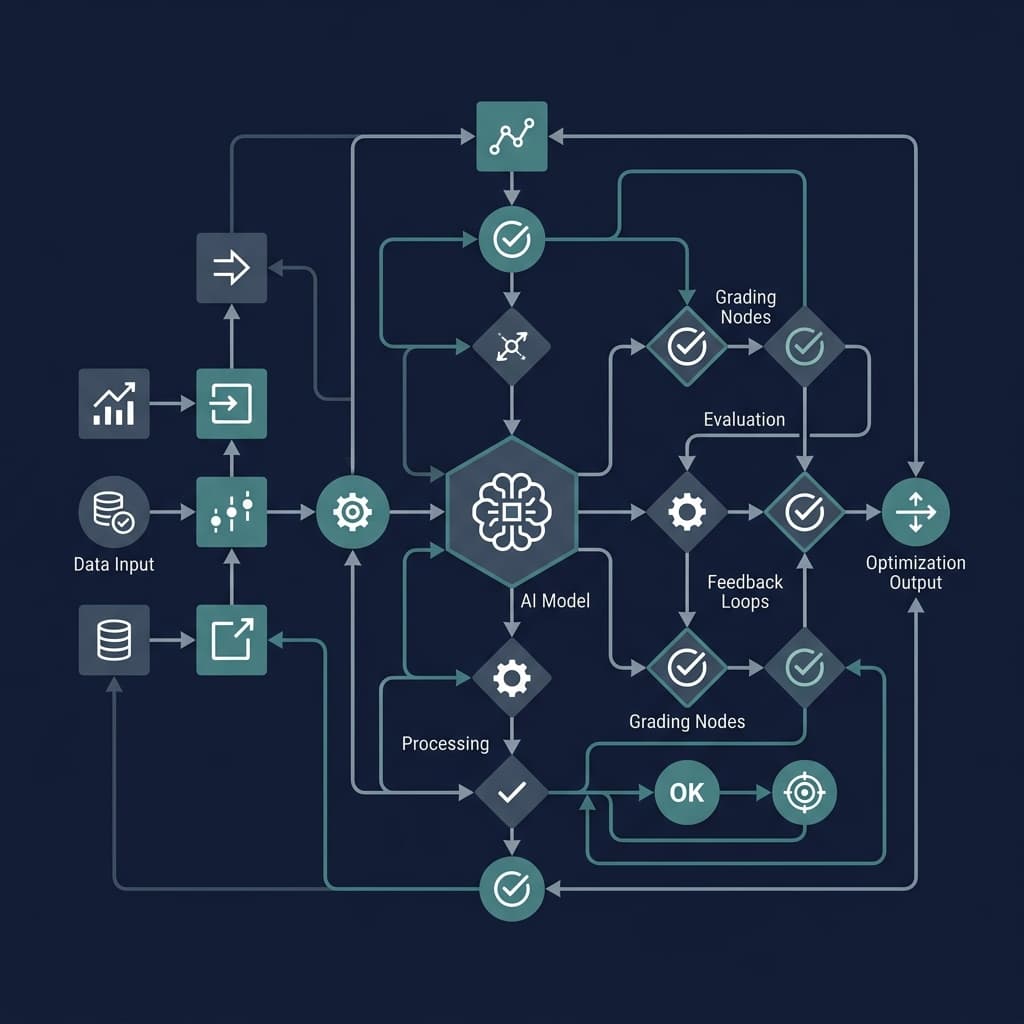
To eliminate these vulnerabilities, we move away from linear chains and adopt a graph-based state machine architecture using LangGraph. LangGraph allows developers to define circular paths, conditional transitions, and state-preserving nodes, making it the ideal framework for creating resilient, self-correcting agent swarms.
"By structuring the AI's cognitive process as a deterministic graph, we enforce strict compliance checks, verify information before it is spoken or sent, and guarantee that the LLM operates within rigid guardrails."
1. The Query Router Node
The entry point of the graph is the Router Node. It performs intent classification on the incoming patient query. Instead of querying a vector database for every input, the Router classifies the intent into categories such as:
- General Clinic Information (directions, parking, hours)
- Protected Health Information (PHI) (lab results, prescription status)
- Scheduling Operations (booking, rescheduling, cancellation)
2. The Structured Retrieval Node
When a query involves patient records or clinical details, we do not rely on raw semantic search alone. Instead, the retrieval node translates natural language requests into structured queries. For example, if a patient asks, "Are my pathology results ready?", the node invokes a tools-based agent that queries the EHR database via secure FHIR (Fast Healthcare Interoperability Resources) APIs, specifying parameters like patient_id and test_date. This is similar to the pipeline we established for our Knowledge Base Preparation Automation, which cleans and structures raw clinical data before exposing it to retrieval systems.
3. The Verification Node (The Fact-Checker)
This is the core of the zero-hallucination architecture. Before the generated response is released to the text-to-speech engine or chat window, it is intercepted by a Verification Node. This node executes a strict double-pass check:
- Source Consistency: An evaluation model analyzes the generated response and compares every assertion against the raw text retrieved from the verified database.
- NLI (Natural Language Inference) Entailment: The model verifies if the generated statement logically flows from the source. If any sentence is labeled as "Neutral" or "Contradictory", the graph routes the state back to the generation node with a critique prompt, initiating a self-correction loop.
4. The Human-in-the-Loop Node
Deterministic graphs require safe failure modes. If the AI receptionist encounters an out-of-scope query or fails verification checks, the call is transferred to a human operator. In voice setups, we utilize Twilio's SIP transfer protocol, passing the live transcript and state history to the clinic's physical desk phone so the human receptionist has full context without making the patient repeat themselves.
Grounding Data with Clinical Pipelines
A zero-hallucination agent is only as good as the data it accesses. In our work with medical practices, we found that clinical policy handbooks, schedules, and patient intake protocols are often stored in fragmented PDFs or scattered web pages. To address this, we developed custom pipelines like our Sitemap Scrapping Automation to extract, parse, and structure internal documents into highly normalized databases.
Furthermore, when presenting complex lab outcomes, AI agents should never summarize raw numbers on the fly. In our project Lab Explanation Report Automation, we utilized structured JSON schemas and dedicated parsing tools to translate patient charts into clear, deterministic explanations. Grounding the output in visual data structures prevents the LLM from fabricating numbers or misinterpreting test reference ranges.
HIPAA & Data Privacy Guardrails
Absolute accuracy must be backed by absolute security. When handling PHI (Protected Health Information), the grounding architecture incorporates:
- End-to-End Encryption: All data is encrypted at rest using AES-256 and in transit using TLS 1.3.
- Local PII Scrubbing: Before sending data to external LLM providers (if not running a local model), a scrubbing engine replaces names, phone numbers, and IDs with secure tokens.
- State-Only Processing: No PHI is persisted in the LangGraph memory state. The state only holds session identifiers, with details fetched on-the-fly and immediately cleared from RAM.
Building a Deterministic Future in Healthcare
Deploying AI in healthcare isn't about chasing the most creative model; it's about building the most disciplined one. By using LangGraph to construct deterministic workflows and grounding every interaction in verifiable databases, medical and dental clinics can safely automate administrative bottlenecks without risking patient safety.
Our success in pathology clinics has proven that a well-architected AI voice assistant or chatbot can capture lost revenue, decrease clinic wait times, and provide patients with 24/7 access to information—all while maintaining absolute compliance and zero hallucinations.

Muhammad Asim
Founder @ Axontick
Founder of Axontick, specialized in AI automation, Multi-Agent Systems, and enterprise-grade voice agents. Expert in bridging the gap between complex AI technology and practical business solutions.