Revolutionizing Patient Care: How AI Voice Agents are Transforming the Healthcare Industry
Explore the technical anatomy, HIPAA compliance, and implementation strategies for AI Voice Agents in medical practices. A 1000+ word deep dive for administrators.
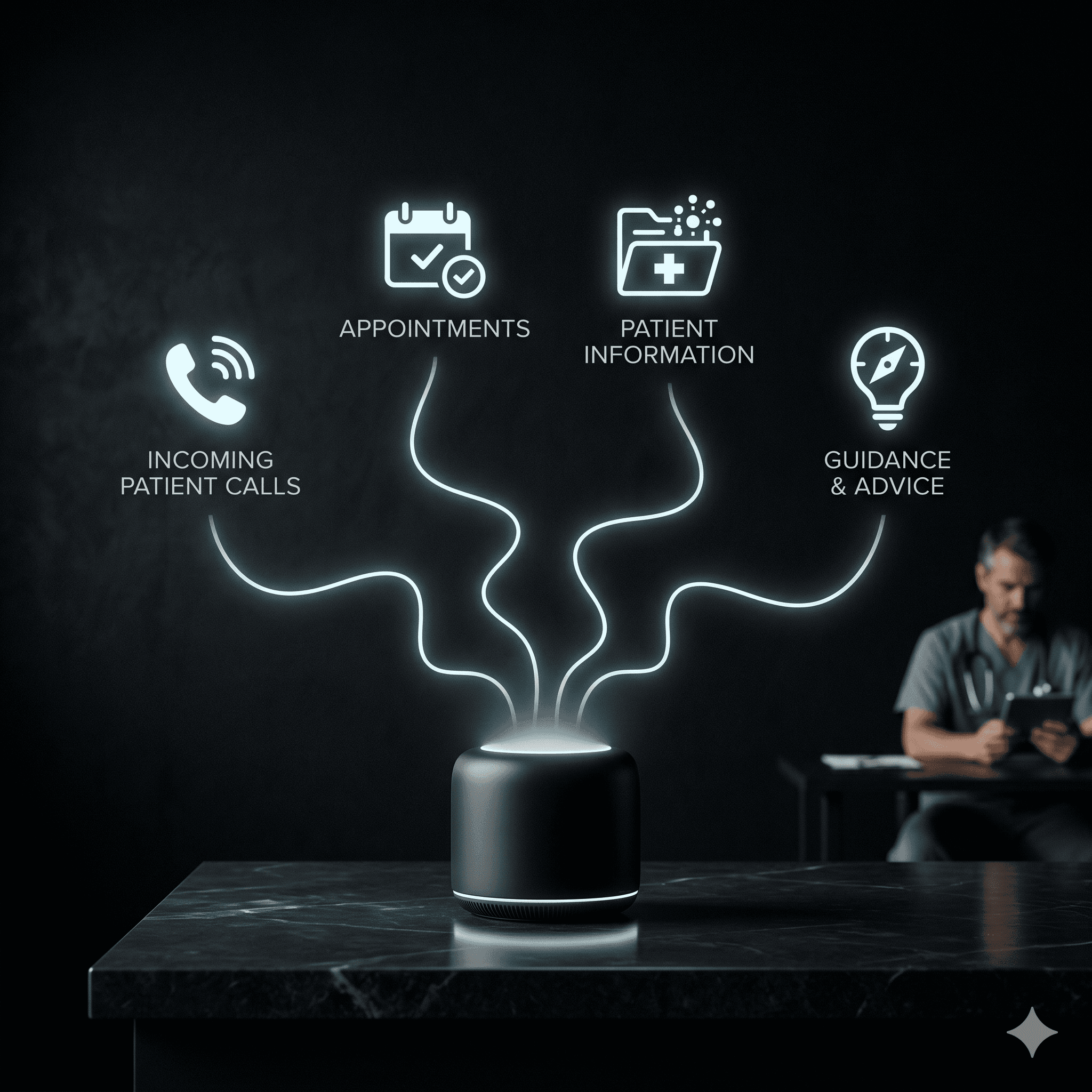
In the high-pressure environment of modern healthcare, the phone line is often the most critical—and most neglected—touchpoint. For many patients, the first interaction with a clinic is a phone call. If that call goes to voicemail or sits in a 10-minute queue, the relationship is over before it even begins. This is the Communication Crisis in healthcare, and AI Voice Agents are the solution.
The Invisible Leak: Why Missed Calls Matter
The healthcare industry is currently facing a silent epidemic of 'Patient Leakage.' Industry data shows that up to 25% of potential new patients hang up if their call isn't answered within three rings. For a medium-sized specialty clinic, this can translate to hundreds of thousands of dollars in lost annual revenue.
"Every missed call in a medical practice isn't just a missed business opportunity—it's a patient in need who has been left unheard."
Traditional receptionists are often overwhelmed. Over 60% of practices report being overwhelmed by call volume, with staff spending 60% of their day on repetitive tasks like providing directions or confirming appointment times. AI Voice Agents reclaim this time, allowing your human staff to focus on high-touch patient care while the 'Digital Assistant' handles the volume.
Beyond the 'Press 1' Nightmare
We’ve all experienced the frustration of legacy IVR systems. Modern AI Voice Agents are not those systems. Powered by advanced Large Language Models (LLMs) and ultra-low latency text-to-speech, these agents offer:
1. Natural Conversations
Patients can speak in full sentences, interrupt the agent, and ask follow-up questions just as they would with a human receptionist.
2. Zero Wait Times
The system can handle 1,000 calls simultaneously, ensuring no patient ever hears a busy signal or sits on hold.
3. Contextual Intelligence
The agent 'remembers' the patient's history if integrated with your EHR (Electronic Health Record) system, providing a personalized experience that increases patient trust.
The HIPAA Requirement: Security First
In healthcare, convenience cannot come at the cost of compliance. Any AI solution must be strictly HIPAA compliant. This means:
- End-to-End Encryption: All audio and transcripts must be encrypted at rest and in transit.
- BAA (Business Associate Agreement): Your AI provider must be willing to sign a BAA.
- Data Deletion: The ability to scrub PII (Personally Identifiable Information) from logs automatically.
By implementing these systems, medical practices can refocus their energy on what matters most: patient health.

Muhammad Asim
Founder @ Axontick
Founder of Axontick, specialized in AI automation, Multi-Agent Systems, and enterprise-grade voice agents. Expert in bridging the gap between complex AI technology and practical business solutions.