Modern conversational telephony has eliminated robotic phone menus, combining full-duplex WebSockets, sub-150ms transcription, and real-time CRM synchronization to deliver sub-second autonomous phone intelligence.
Deploying AI voice agents for business allows enterprises to replace cumbersome touch-tone menus with sovereign conversational telephony that resolves complex customer inquiries in real time. Unlike legacy automated responders or text chatbots retrofitted with audio wrappers, modern voice agents operate at sub-500ms response latencies, answering 100% of inbound calls, intelligently qualifying caller intent, and executing bi-directional calendar bookings and database updates without human friction.
By orchestrating streaming Speech-to-Text (STT), low-latency foundational models, and high-fidelity speech synthesis across full-duplex WebSockets, companies turn unattended phone lines from cost centers into high-velocity operational assets.
┌────────────────────────────────────────────────────────────────────────┐
│                   ENTERPRISE TELEPHONY TRANSFORMATION                  │
├───────────────────────────────────┬────────────────────────────────────┤
│       LEGACY TOUCH-TONE IVR       │    AUTONOMOUS AI VOICE AGENTS      │
├───────────────────────────────────┼────────────────────────────────────┤
│ • "Press 1 for Sales, 2 for Tech" │ • "How can I help you today?"      │
│ • 67% caller abandonment rate     │ • Sub-500ms conversational replies │
│ • Static, rigid tree structures   │ • Dynamic reasoning & intent route │
│ • Zero caller context or memory   │ • Live bi-directional CRM lookup   │
│ • No action beyond call transfer  │ • Autonomous booking & dispatch    │
└───────────────────────────────────┴────────────────────────────────────┘
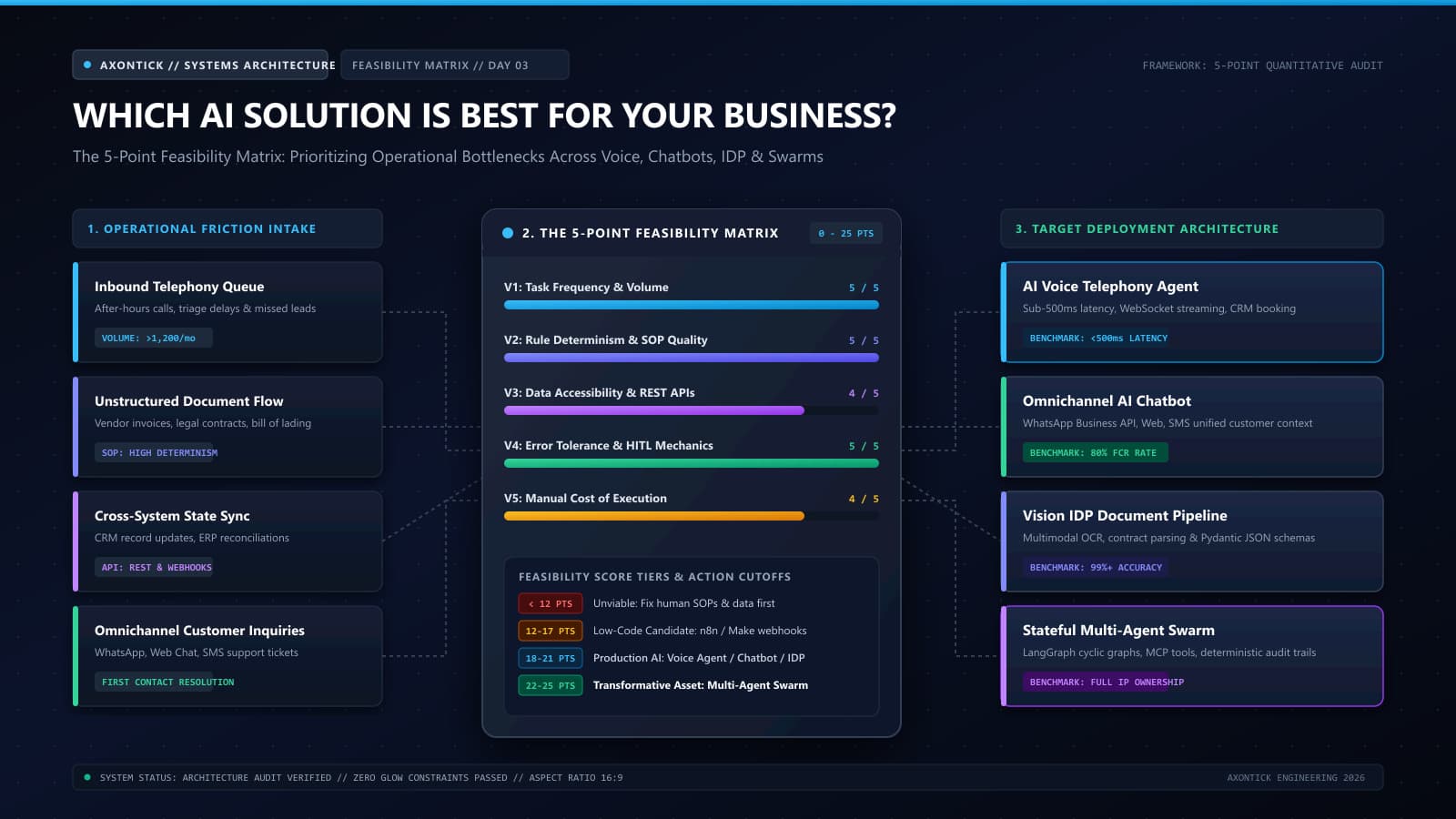
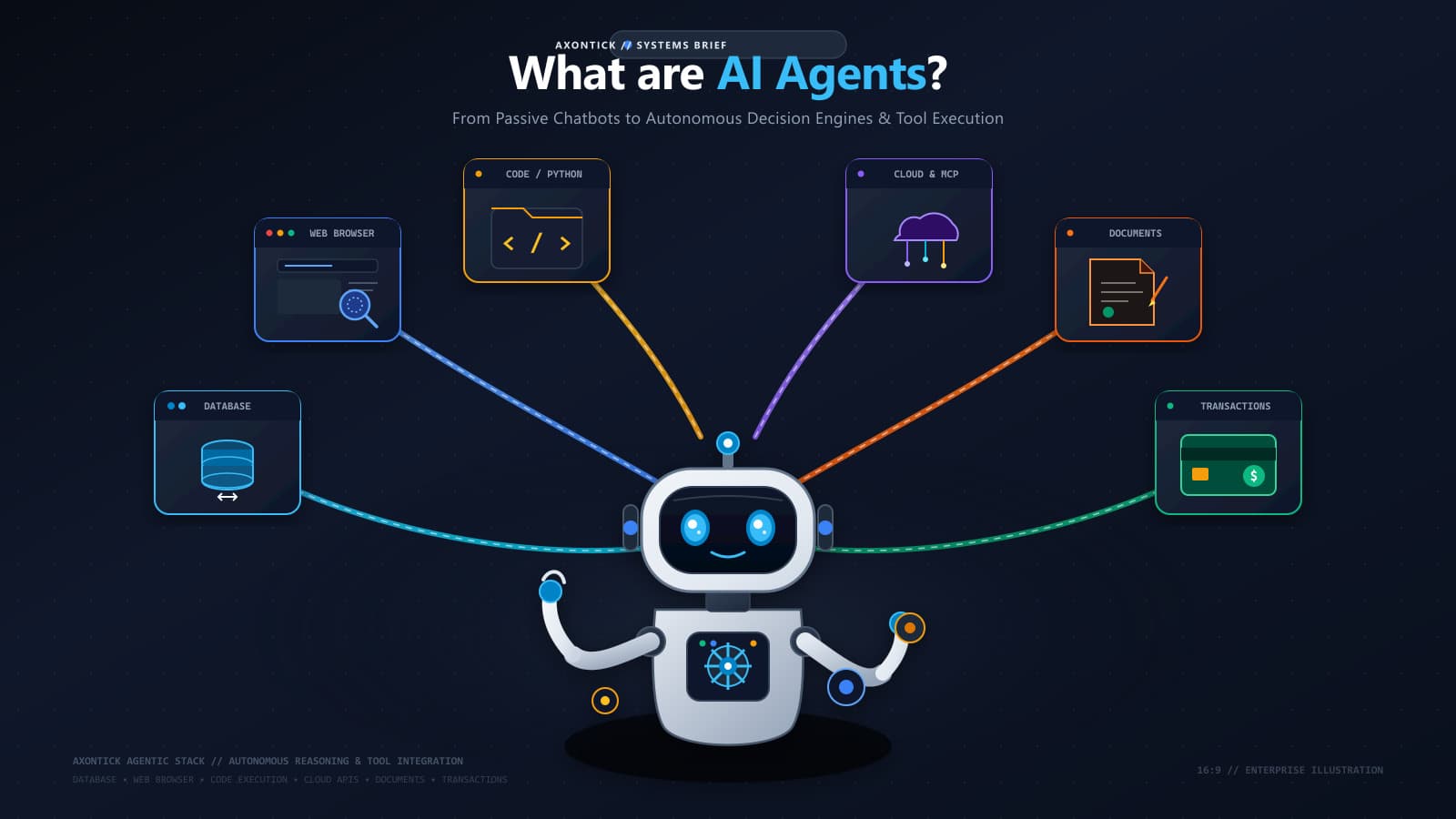
Following our foundational analyses of What Are AI Agents? and our 5-Point Feasibility Matrix, this architectural guide dissects how production AI voice agents for business are engineered, benchmarked, and integrated into live enterprise infrastructure.
The Death of the Interactive Voice Response (IVR) Phone Tree
For more than three decades, enterprise customer telephony was dominated by Interactive Voice Response (IVR) systems. Built on Dual-Tone Multi-Frequency (DTMF) signaling, IVRs forced human callers to navigate branched numeric mazes ("Press 1 for billing, press 2 for scheduling...").
The operational consequences of legacy IVR setups are well-documented:
- Severe Caller Abandonment: Over 67% of callers abandon calls when subjected to multi-tiered numeric menus, opting to hang up and call competitors rather than wait for an operator.
- High Agent Burnout: Frontline human receptionists spend up to 70% of their workday repeating identical triage questions (e.g., verifying policy numbers, taking spelling of names, reciting office hours).
- Lost After-Hours Revenue: When offices close at 5:00 PM, inbound calls dump into voicemail boxes where average callback turnaround exceeds 14 hours—by which time 80% of prospective buyers have engaged another service provider.
Modern conversational telephony AI marks the definitive death of the touch-tone tree. Instead of constraining the human to rigid machine inputs, the machine adapts to natural human speech. Callers speak casually, interrupt when needed, provide complex context in a single breath, and receive immediate, helpful answers.
| Operational Dimension | Legacy Touch-Tone IVR | First-Gen Voicebots (2023) | Modern AI Voice Agents (2026) |
|---|---|---|---|
| Input Modality | DTMF (Numeric keypad) | Simple keyword matching | Natural continuous speech |
| Response Latency | Instant (Audio playback) | 2,500ms – 4,500ms (Unusable) | 380ms – 550ms (Natural conversation) |
| Interruption / Barge-in | Disabled during prompts | Halting or broken audio | Instant, graceful packet cancellation |
| Database Synchronization | Read-only account balance | Batch file exports nightly | Real-time bi-directional REST / Webhooks |
| Resolution Capability | Call routing only | Basic FAQ regurgitation | End-to-end task completion (Bookings/Payments) |
When deployed effectively, conversational telephony AI shifts the telephone from an expensive manual bottleneck into an autonomous operational channel that never sleeps, never burns out, and never puts a customer on hold.
Anatomy of Sub-Second Voice AI Latency: WebSockets, STT, LLM Streaming, and TTS
In voice telephony, latency is not a minor cosmetic detail—it is the governing constraint of human interaction. Sociolinguistic research indicates that normal human conversational turn-taking takes place within a 200ms to 400ms window. When an artificial voice takes longer than 800ms to respond, the silence feels unnatural. Once latency exceeds 1,200ms, human callers assume the line has disconnected or begin speaking again, causing catastrophic conversational collision.
Achieving sub-second voice AI latency requires an optimized end-to-end pipeline. Traditional "cascaded" architectures—where audio is recorded, uploaded as a WAV file, transcribed in bulk, sent to an LLM, and then synthesized in full before playback—accumulate between 2,500ms and 5,000ms of lag.
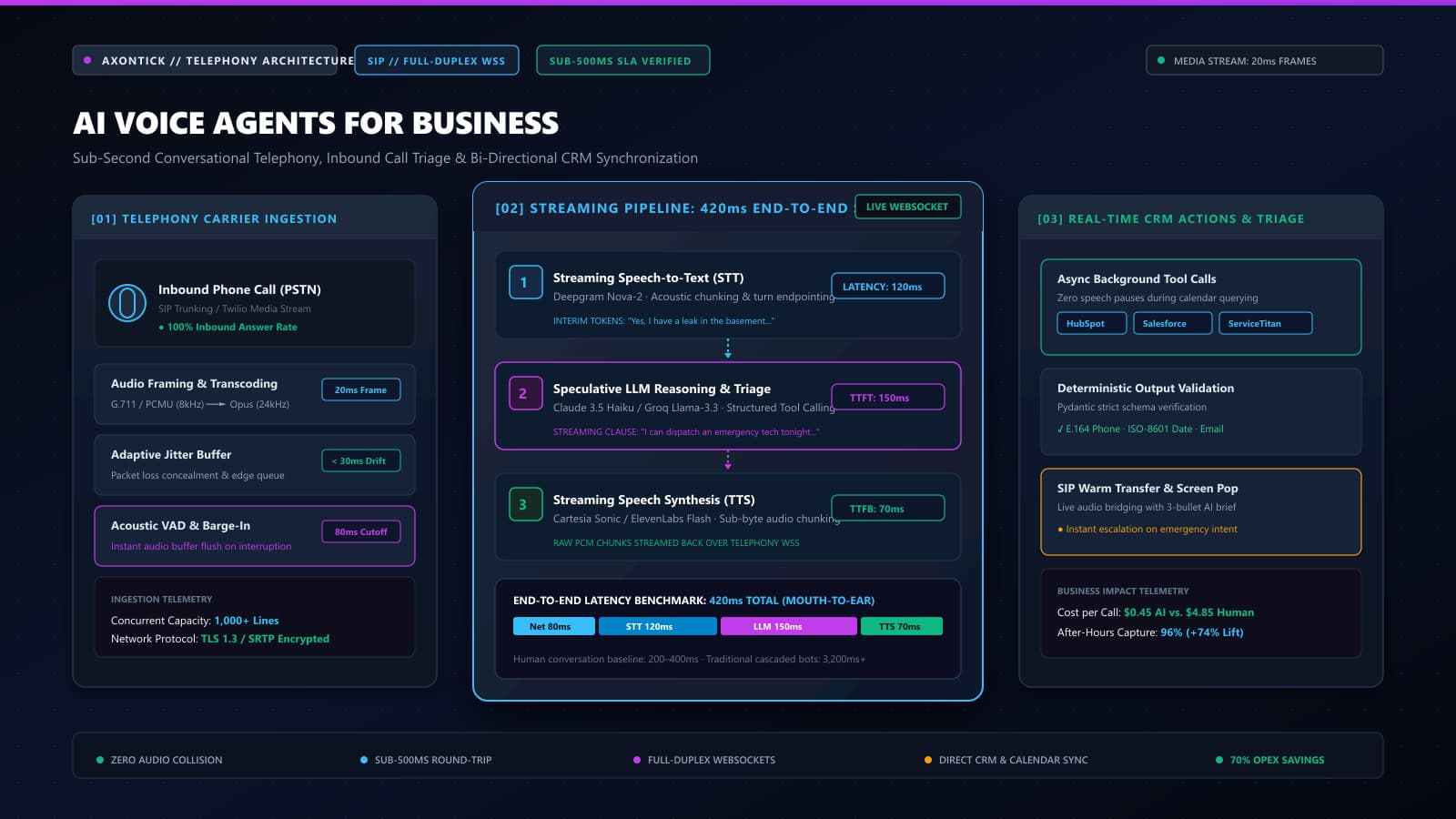
Production systems achieve sub-second voice AI latency by streaming every layer concurrently over full-duplex WebSockets:
┌────────────────────────────────────────────────────────────────────────┐
│             FULL-DUPLEX WEBSOCKET TELEPHONY EVENT STREAM               │
└───────────────────────────────────┬────────────────────────────────────┘
                                    │
                         Caller Audio (G.711 / PCMU)
                                    │
                                    ▼
┌────────────────────────────────────────────────────────────────────────┐
│ 1. TELEPHONY GATEWAY (Twilio / SIP Trunk / LiveKit)                   │
│    • Inbound audio chunking (20ms frames)                              │
│    • Jitter buffer smoothing & Opus transcoding                        │
└───────────────────────────────────┬────────────────────────────────────┘
                                    │ Audio Frame Stream
                                    ▼
┌────────────────────────────────────────────────────────────────────────┐
│ 2. STREAMING SPEECH-TO-TEXT (Deepgram Nova-2)                          │
│    • Sub-120ms interim word emissions                                 │
│    • Dynamic Voice Activity Detection (VAD) silence threshold          │
└───────────────────────────────────┬────────────────────────────────────┘
                                    │ Final Utterance Event
                                    ▼
┌────────────────────────────────────────────────────────────────────────┐
│ 3. SPECULATIVE LLM INFERENCE (Claude 3.5 Haiku / Groq Llama-3.3)      │
│    • Time-to-First-Token (TTFT): ~120ms - 180ms                        │
│    • Chunked token streaming on phrase boundaries (commas, periods)    │
└───────────────────────────────────┬────────────────────────────────────┘
                                    │ Partial Token Chunks
                                    ▼
┌────────────────────────────────────────────────────────────────────────┐
│ 4. STREAMING TEXT-TO-SPEECH (Cartesia Sonic / ElevenLabs Flash)       │
│    • Time-to-First-Byte (TTFB): ~60ms - 90ms                           │
│    • Immediate audio packet streaming back to telephony caller         │
└───────────────────────────────────┬────────────────────────────────────┘
                                    │ Synthesized Audio Chunks
                                    ▼
                         Caller Hears Voice Response
The Production Telephony Latency Budget
To maintain natural cadence, every millisecond across the telemetry stack must be strictly budgeted:
- Telephony & Network Transit (100ms – 140ms): Audio packets traveling from the caller's mobile carrier over SIP trunking to the media gateway.
- Streaming STT & Turn Detection (120ms – 160ms): Deepgram Nova-2 processing streaming PCM chunks, utilizing predictive acoustic models to finalize tokens the instant speech stops.
- LLM First-Token Inference (120ms – 180ms): High-throughput reasoning engines (such as Claude 3.5 Haiku via Anthropic API or Llama-3.3-70B via Groq) returning the first sentence clause.
- Streaming TTS Synthesis (60ms – 90ms): Sonic models generating raw PCM audio from the first 5-token chunk before the LLM has even completed generation.
Total End-to-End Latency: 400ms – 570ms.
By maintaining this sub-600ms mouth-to-ear budget, enterprise deployments of conversational telephony AI sound crisp, attentive, and completely natural.
Full-Duplex Audio & Barge-In: Solving Conversational Collision
In early voice implementations, callers were frequently trapped in "half-duplex" loops: if the bot was speaking, it could not listen. If the caller tried to correct a misunderstanding or say "Wait, I actually need billing," the bot continued reciting its pre-rendered script until finished. Without full-duplex engineering, conversational telephony AI collapses into frustrating awkward pauses whenever callers speak out of turn.
Production AI voice agents for business demand full-duplex bi-directional audio with instant barge-in handling:
Caller speaks:  "Actually, I need emergency service tonight!"
                    │
                    ▼ (Acoustic VAD triggers in 80ms)
Media Gateway:  [CANCEL_OUTBOUND_BUFFER] ──► Flushes queued TTS audio packets
                    │
LLM Bus:        [ABORT_CURRENT_GENERATION] ──► Drops current token stream
                    │
New Event:      [PROCESS_USER_INTERRUPT] ──► Ingests emergency request immediately
Implementing robust barge-in requires three interlocking engineering controls:
- Acoustic Voice Activity Detection (VAD): Distinguishing intentional caller speech from background static, car horns, coughs, or room echo. If a dog barks, the agent should ignore the spike; if the caller speaks a phoneme, the agent must silence its output within 100ms.
- Telephony Echo Cancellation (AEC): Ensuring the caller's microphone does not feed the agent's own speech back into the STT engine, creating an acoustic feedback loop.
- Instant Outbound Packet Purging: When an interruption event fires, the media server must not play out the remainder of its audio buffer. It must instantly truncate the buffer on the SIP stream and signal the LLM context bus to record the user's new utterance.
Inbound Voice Automation at Scale: Live Call Scenarios & Emergency Triage
Deploying inbound voice automation across high-volume environments delivers immediate operational ROI by capturing lost revenue and routing high-stakes inquiries. Consider three real-world production deployments architected by Axontick:
Scenario 1: After-Hours Emergency HVAC & Home Services Dispatch
- The Operational Bottleneck: An emergency plumbing and HVAC firm receives 35 after-hours calls per night during freeze warnings. Inbound callers whose pipes burst cannot wait for morning voicemail review; if no one answers, they immediately call the next contractor on Google Maps.
- The Voice Agent Workflow:
- An AI phone receptionist answers the call on the first ring (sub-500ms).
- The agent empathetically triages the severity: "I understand water is leaking into your basement. Is the main shutoff valve accessible?"
- The agent verifies the caller's service address against internal technician coverage zones via real-time REST API lookup.
- The agent books an emergency dispatch slot in ServiceTitan, logs the customer's credit card authorization, and triggers an automated SMS alert to the on-call technician's mobile phone.
- The Business Impact: Emergency call capture increased from 22% to 96%, adding $48,000 in monthly after-hours gross revenue while eliminating the need for expensive third-party answering services.
Scenario 2: High-Volume Dental & Medical Clinic Intake
- The Operational Bottleneck: A regional dental practice with 14 operatories receives over 450 inbound calls daily. Front desk receptionists juggle in-person patient check-ins with constant phone rings, leading to hold times exceeding 4 minutes and a 24% call abandon rate.
- The Voice Agent Workflow:
- The AI phone receptionist handles Tier-1 scheduling, insurance verification, and appointment cancellations.
- The agent queries the practice management software (PMS) to identify open hygiene chairs for Tuesday afternoon.
- The agent books the patient, collects dental insurance carrier details, and sends a calendar invite with intake forms via SMS.
- If the caller reports severe facial trauma or acute pain, the agent executes an immediate warm transfer to the triage nurse.
- The Business Impact: Inbound phone wait times dropped to 0 seconds. By deploying a 24/7 AI phone receptionist, clinic front desk staff regained 3.5 hours per day to focus on patient in-office care, and monthly patient intake appointments grew by 18%.
┌────────────────────────────────────────────────────────────────────────┐
│                   INBOUND CALL TRIAGE DECISION TREE                    │
└───────────────────────────────────┬────────────────────────────────────┘
                                    │
                               Inbound Call
                                    │
                                    ▼
┌────────────────────────────────────────────────────────────────────────┐
│ INTENT CLASSIFICATION ENGINE (Deepgram STT + LLM Prompt Classifier)    │
│ "What brings you in today?"                                            │
└───────────┬───────────────────────┬──────────────────────┬─────────────┘
            │                       │                      │
       EMERGENCY               APPOINTMENT              GENERAL
     (Acute Pain /             (New Patient /             FAQ
     Burst Pipe)              Reschedule)            (Hours / Address)
            │                       │                      │
            ▼                       ▼                      ▼
┌───────────────────────┐ ┌───────────────────┐ ┌──────────────────────┐
│ Priority Escalation   │ │ Autonomous Engine │ │ Direct Answer        │
│ • SIP Warm Transfer   │ │ • Calendar check  │ │ • Instant TTS reply  │
│ • On-call SMS blast   │ │ • Direct PMS sync │ │ • SMS link dispatch  │
│ • Log CRM urgency     │ │ • Confirm via SMS │ │ • Wrap call cleanly  │
└───────────────────────┘ └───────────────────┘ └──────────────────────┘
By leveraging inbound voice automation, businesses ensure that routine transactional inquiries are handled autonomously, while genuine emergencies receive instant human attention. Furthermore, scalable inbound voice automation eliminates the need to maintain costly overflow BPO contracts during seasonal volume spikes.
Bi-Directional Voice Agent CRM Integration: Real-Time Calendar Booking & State Updates
An AI voice agent that can only talk is merely an interactive entertainment toy. To generate true enterprise value, the agent must be able to act—reading from and writing to internal enterprise databases during the conversation.
Achieving seamless voice agent CRM integration presents a unique systems challenge: execution latency. If an agent calls a slow CRM endpoint that takes 1,800ms to respond, the voice conversation freezes, leaving the caller sitting in dead silence.
To prevent conversational lag during tool execution, Axontick implements a decoupled asynchronous architecture:
Caller: "Can you book me for Thursday at 2:00 PM with Dr. Miller?"
            │
            ▼
AI Agent:  "Let me check Dr. Miller's calendar for Thursday at two..."
            ├──► Audio played immediately to caller (Zero awkward silence)
            │
            └──► Asynchronous Background Tool Call (REST / Webhook)
                 POST /api/calendar/check-availability
                 { "doctor_id": "doc_99", "timestamp": "2026-10-15T14:00:00Z" }
                     │
                     ▼
Response:        { "available": true, "slot_id": "slot_4481" }
                     │
                     ▼
AI Agent:  "...Yes, that slot is open! I've reserved Thursday at 2:00 PM for you."
Deterministic Output Validation with Pydantic
When the agent collects caller data—such as phone numbers, email addresses, vehicle VINs, or insurance IDs—natural language models can occasionally introduce spelling variations. To guarantee data integrity before committing records to HubSpot, Salesforce, or custom PostgreSQL databases, structured function calls are validated against deterministic schemas:
from pydantic import BaseModel, EmailStr, Field
from typing import Optional
from datetime import datetime

class InboundCallerBookingPayload(BaseModel):
    caller_full_name: str = Field(description="Caller's legal first and last name")
    phone_e164: str = Field(regex=r"^\+[1-9]\d{1,14}$", description="E.164 formatted telephone number")
    email_address: EmailStr = Field(description="Validated email address for appointment confirmation")
    appointment_slot: datetime = Field(description="ISO-8601 formatted target appointment time")
    service_tier: str = Field(description="Requested diagnostic or service category")
    urgency_level: str = Field(description="Triage tag: Routine, Priority, or Emergency")
    notes: Optional[str] = Field(default=None, description="Acoustic or caller-specified context")
If the caller provides an ambiguous email address ("asim at axontick"), the validation layer catches the missing top-level domain and instructs the conversational model to politely clarify: "Could you confirm if that's .com or .io?" By enforcing structured validation schemas during voice agent CRM integration, enterprises prevent corrupt data entries and ensure real-time field reconciliation across all customer touchpoints.
Through disciplined voice agent CRM integration, your database remains clean, enriched, and accurate—without requiring human transcription.
Human-in-the-Loop Telephony: Warm Transfers & Escalation Protocols
Even the most sophisticated AI voice agents for business must incorporate structured fallback mechanisms. When an edge case occurs—such as an emotionally distressed caller, a complex multi-party dispute, or an explicit request for human management—the agent must execute a flawless live escalation.
The Mechanics of an AI-to-Human Warm Transfer
A cold transfer dumps the caller back into a generic hold queue, forcing them to re-explain their entire issue from scratch. In contrast, an AI warm transfer passes the full conversational state directly to the human agent's computer screen before bridging the audio line:
┌────────────────────────────────────────────────────────────────────────┐
│                     WARM TELEPHONY TRANSFER FLOW                       │
└───────────────────────────────────┬────────────────────────────────────┘
                                    │
                     Caller requests human supervisor
                                    │
                                    ▼
┌────────────────────────────────────────────────────────────────────────┐
│ 1. AI AGENT REASSURANCE & HOLD AUDIO                                   │
│    • "I'd be glad to connect you with our senior dispatch lead."       │
│    • Injects pleasant ambient comfort audio onto the caller's leg      │
└───────────────────────────────────┬────────────────────────────────────┘
                                    │
                                    ▼
┌────────────────────────────────────────────────────────────────────────┐
│ 2. TELEPHONY SIP REFERRAL & SCREEN POP                                 │
│    • Fires webhook to human call center console (Twilio / Zendesk)     │
│    • Injects structured 3-bullet summary:                              │
│      - Caller identity, authenticated account number                   │
│      - Exact issue: "Refrigerant leak, system shut down"               │
│      - Unresolved sentiment: Frustrated, urgent request                │
└───────────────────────────────────┬────────────────────────────────────┘
                                    │
                                    ▼
┌────────────────────────────────────────────────────────────────────────┐
│ 3. LIVE AUDIO LINE BRIDGING                                            │
│    • Human answers: "Hello Sarah, I see you have a refrigerant leak..."│
│    • Caller experiences seamless continuity with zero repeated context │
└────────────────────────────────────────────────────────────────────────┘
This hybrid workflow ensures that human specialists focus 100% of their energy on complex, high-empathy negotiations, while the AI handles high-volume frontline triage.
Evaluating ROI: How AI Voice Agents Cut Call Handling Costs by 70%
When evaluating AI voice agents for business, executives must calculate the true unit economics of call center staffing.
Consider the direct financial metrics of a typical 10-person customer service or dispatch team:
- Human Agent Fully-Loaded Cost: An average in-house call representative costs $45,000 annually in base wages, benefits, equipment, and management overhead. A 10-person team incurs a $450,000 annual baseline cost.
- Human Call Handling Capacity: A human agent actively handles approximately 35 to 45 calls per 8-hour shift, yielding a fully-loaded cost of $3.80 to $6.20 per completed phone interaction.
- AI Voice Agent Cost: Utilizing modern high-throughput streaming infrastructure (Twilio SIP + Deepgram Nova-2 + Claude 3.5 Haiku + Cartesia TTS), the variable consumption cost ranges between $0.11 and $0.18 per call minute. A typical 3-minute interaction costs approximately $0.45.
┌────────────────────────────────────────────────────────────────────────┐
│                   CALL COST COMPARISON PER RESOLUTION                  │
├────────────────────────────────────────────────────────────────────────┤
│ HUMAN REPRESENTATIVE ($4.85 avg / call)                                │
│ ████████████████████████████████████████████████████████████ 100%      │
│                                                                        │
│ OFFSHORE BPO DESK ($2.20 avg / call)                                   │
│ ███████████████████████████ 45%                                        │
│                                                                        │
│ AUTONOMOUS AI VOICE AGENT ($0.45 avg / call)                           │
│ █████ 9.2%                                                             │
└────────────────────────────────────────────────────────────────────────┘
Beyond direct unit savings, the secondary operational benefits compound rapidly:
- Infinite Instant Concurrency: When a marketing campaign launches or bad weather strikes, call volume may surge by 500%. Human call centers collapse into multi-hour wait times; an AI voice architecture scales from 1 to 1,000 concurrent calls instantly with zero wait times.
- Elimination of Abandonment Losses: Businesses in high-ticket service verticals (roofing, legal intake, dental surgery) lose thousands of dollars every time an inbound lead reaches voicemail. Capturing 95%+ of inbound inquiries immediately boosts top-line pipeline generation. Deploying dedicated AI voice agents for business guarantees that every inbound sales or service opportunity is engaged and converted instantly.
To calculate your organization's exact staffing cost reductions and projected break-even timeline, model your call volumes in our interactive AI Pricing Calculator.
Technical Architecture Comparison: Choosing Your Telephony Stack
When architecting AI voice agents for business, selecting the right layer integrations dictates system reliability. The matrix below outlines the industry-standard tech stack deployed by Axontick across enterprise implementations:
| Layer | Recommended Technology | Latency Performance | Key Architectural Advantage |
|---|---|---|---|
| Telephony Gateway | Twilio Media Streams / Telnyx SIP | ~80ms – 120ms | Global carrier interconnects, bi-directional audio WebSockets, native DTMF fallback |
| Media Server / Orchestration | LiveKit / Vapi / Custom Go Server | ~20ms – 40ms | Minimal packet overhead, edge network routing, real-time client state management |
| Speech-to-Text (STT) | Deepgram Nova-2 | ~110ms – 150ms | Streaming audio frames, enterprise acoustic models, smart punctuation, custom vocabularies |
| Core Reasoning (LLM) | Claude 3.5 Haiku / Groq Llama-3.3 | ~120ms – 190ms | Ultra-fast Time-to-First-Token (TTFT), deterministic tool calling, structured JSON output |
| Speech Synthesis (TTS) | Cartesia Sonic / ElevenLabs Flash | ~60ms – 90ms | High-fidelity human timbre, chunked streaming byte generation, dynamic emotional inflection |
| CRM / System of Record | HubSpot / Salesforce / PostgreSQL | Async (~150ms) | Decoupled background webhooks, Pydantic schema validation, automated lead deduplication |
By uniting these best-of-breed components into an orchestrated event bus, enterprises deploy voice systems that outpace generic, monolithic SaaS voice products in speed, reliability, and custom workflow depth.
Explore our dedicated Enterprise AI Services to review live telephony client demonstrations and architectural benchmarks.
Frequently Asked Questions About AI Voice Agents for Business
How fast does an AI voice agent respond on a phone call?
A properly architected enterprise AI voice agent responds in 400 to 600 milliseconds. This sub-second latency is achieved by streaming audio over full-duplex WebSockets, running sub-150ms Speech-to-Text via Deepgram Nova-2, utilizing fast streaming LLMs like Claude 3.5 Haiku, and generating audio via chunked streaming TTS engines like Cartesia.
What is the primary difference between legacy IVR and conversational AI voice agents?
Legacy IVR systems rely on rigid numeric keypads ("Press 1 for Sales") and static branching logic that cannot understand natural speech or resolve dynamic queries. Conversational AI voice agents listen to full spoken sentences, interpret context and sentiment, query live backend CRMs in real time, and execute complex workflows like scheduling appointments or processing payments autonomously.
How do AI voice agents handle background noise and caller interruptions?
Production voice agents incorporate acoustic Voice Activity Detection (VAD) and Acoustic Echo Cancellation (AEC). When a caller speaks while the agent is talking (barge-in), the system detects speech within 80 milliseconds, instantly flushes the remaining audio packets from the telephony stream, cancels current model generation, and transitions to listening mode immediately.
Can an AI phone receptionist write directly to our existing CRM?
Yes. Modern voice agents integrate directly with HubSpot, Salesforce, GoHighLevel, ServiceTitan, and custom SQL databases via secure REST APIs and webhooks. By using asynchronous tool execution, the agent checks calendar availability, books appointments, and updates lead statuses without pausing conversational audio.
What happens when an AI voice agent encounters a complex issue it cannot resolve?
The voice agent initiates an automated warm transfer. The agent reassures the caller, places them on a brief ambient hold, and dials the on-call human specialist via SIP referral. Concurrently, the agent injects a concise 3-bullet summary of the caller's identity, issue, and sentiment onto the human agent's screen, ensuring a seamless handover without repeating information.
Conclusion: Transforming Your Phone Lines into Autonomous Systems of Action
The telephone remains the highest-converting, highest-intent communication channel in enterprise commerce. When a customer calls your organization, they are not looking to browse an FAQ page or wait three days for an email response—they need immediate, authoritative action.
Failing to answer the phone or forcing callers into frustrating IVR menus actively drives business directly into the hands of your competitors. Deploying AI voice agents for business bridges the gap between customer expectations and operational capacity, delivering sub-second, 24/7 responsiveness that scales indefinitely.
By engineering a low-latency telephony stack with robust CRM synchronization and human-in-the-loop escalations, your organization converts unattended phone lines into an automated growth engine.
Ready to deploy autonomous conversational telephony in your enterprise?
- Model your call volume savings and deployment ROI using our interactive AI Pricing Calculator.
- Discover how Axontick architects custom voice telephony on our AI Voice Agents Service Page.
- Review our battle-tested 4-Step Engineering Delivery Process and book an architectural discovery call with our systems team today.
Want this deployed for your enterprise?
Axontick engineers architect, benchmark, and deploy custom enterprise autonomous systems with guaranteed uptime, sub-second latency, and 100% IP ownership.

Muhammad Asim
Founder @ AxontickFounder of Axontick, specialized in AI automation, Multi-Agent Systems, and enterprise-grade voice agents. Expert in bridging the gap between complex AI technology and practical business solutions.