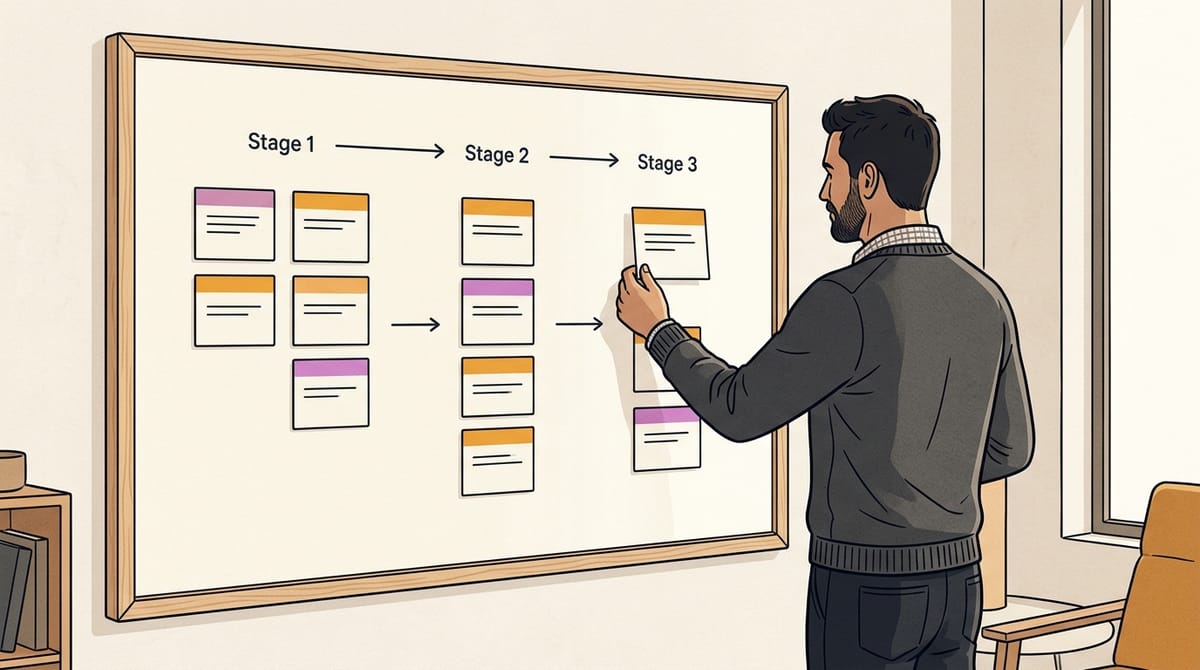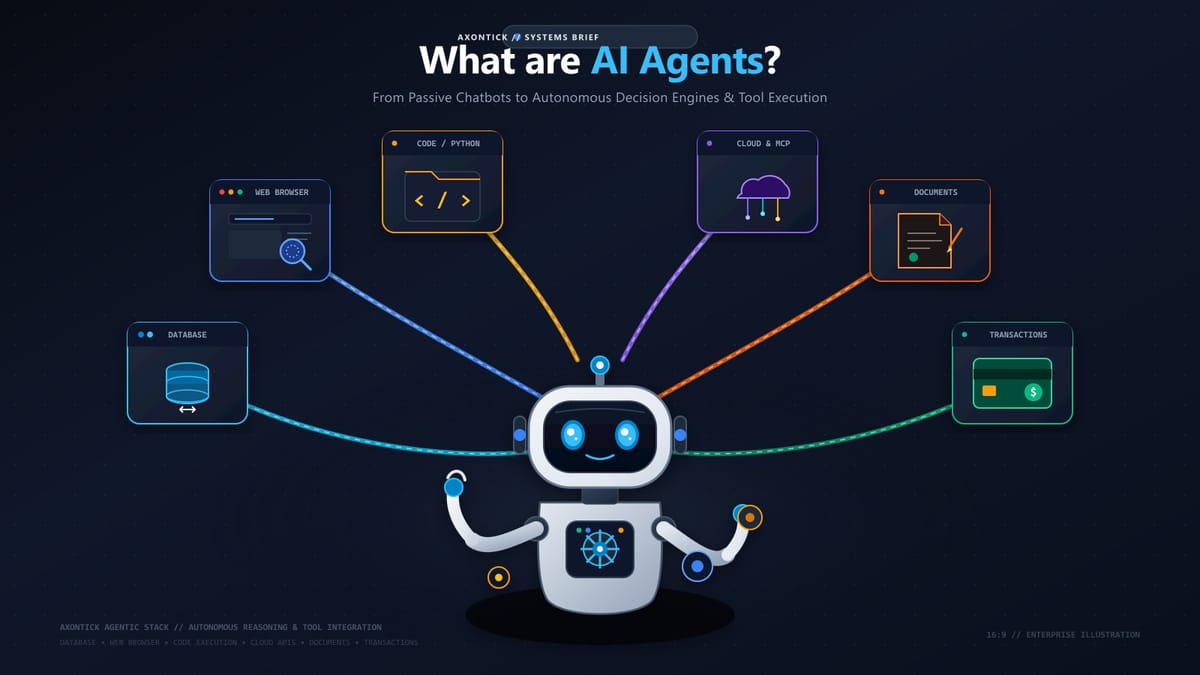
The most profitable enterprises in the agentic era do not lay off their core staff; they build "Centaur" teams that multiply per-capita output by 5x. An effective AI workforce augmentation strategy pairs frontline domain specialists with autonomous multi-agent systems, shifting human effort from low-leverage mechanical execution to high-leverage strategic supervision. While indiscriminate workforce displacement triggers severe talent debt, broken operational edge cases, and catastrophic loss of institutional memory, workforce augmentation creates an adaptable operational engine where a 10-person unit delivers the velocity and precision of a 50-person organization.
The Centaur Model: Combining Human Intuition with Agentic Compute
The concept of the "Centaur" originated in 1998 when chess grandmaster Garry Kasparov pioneered Advanced Chess. Kasparov demonstrated that a human grandmaster paired with a standard desktop chess engine could consistently defeat both an unassisted human champion and a monolithic supercomputer running in isolation. The synthesis of human intuition, contextual pattern recognition, and machine compute proved mathematically superior to raw algorithmic horsepower.
In enterprise architecture, centaur teams AI systems apply this exact balance to knowledge work. Rather than asking an artificial intelligence model to manage end-to-end business operations without human context, an enterprise centaur team structurally splits workflows into two functional layers:
- The Machine (Body of Execution): High-speed computational agents that parse unstructured telemetry, cross-reference live databases, draft technical deliverables, process documents, and coordinate deterministic multi-step tool calls.
- The Human (Head of Strategy and Governance): Domain specialists who supply ethical framing, evaluate ambiguity, negotiate high-stakes exceptions, interpret nuanced client intentions, and assume ultimate accountability for business outcomes.
+-----------------------------------------------------------------------------------+
|                        THE ENTERPRISE CENTAUR OPERATING MODEL                     |
+-----------------------------------------------------------------------------------+
|                                                                                   |
|   HUMAN OPERATOR (Strategic Head)                                                 |
|   * Intuitive Judgment  * Ethical & Legal Governance  * High-Stakes Negotiations  |
|   * Contextual Intent   * Relationship Architecture   * Quality Threshold Signoff |
|                                 |                                                 |
|                                 v (Bidirectional Feedback & Intent Vectors)       |
|                                                                                   |
|   AUTONOMOUS AGENTIC COMPUTE (Body of Execution)                                  |
|   * Sub-Second Retrieval * Deterministic Validation * Real-Time Telemetry Parsing |
|   * Multi-Model Synthesis * Cross-Platform Webhooks * 24/7 Scalable Data Engine   |
|                                                                                   |
+-----------------------------------------------------------------------------------+
Treating artificial intelligence as an outright replacement for human employees misdiagnoses the fundamental nature of modern large language models. LLMs are probabilistic prediction engines, not conscious business operators. When deployed as unsupervised replacements, they inevitably hallucinate, drift under distribution shifts, and miss critical cultural nuance.
Conversely, when an organization implements a rigorous AI workforce augmentation strategy, the software absorbs the 80% cognitive baseline of documentation, research, and repetitive data manipulation. This structural alignment elevates frontline workers into high-leverage supervisors. Establishing centaur teams AI workflows transforms knowledge workers from exhausted clerical processors into empowered system directors. Furthermore, creating a resilient human in the loop workforce ensures that algorithmic precision is always anchored by institutional domain expertise.
Augmentation vs. Displacement: The Hidden Balance Sheet Trap of Premature Layoffs
During corporate earnings calls, executive leadership teams often face intense shareholder pressure to demonstrate instant margin expansion by replacing knowledge workers with automated algorithms. This blunt approach—treating AI purely as an instrument for payroll reduction—creates an invisible balance sheet liability known as "talent debt."
In the ongoing debate regarding workforce displacement vs augmentation, empirical industry data underscores the acute financial risk of premature staff displacement. Gartner research projects that by 2029, 30% of enterprise workers terminated as part of aggressive AI displacement initiatives will need to be rehired—frequently as expensive external consultants or at elevated replacement salaries—to repair damaged workflows and restore lost domain intelligence.
+-----------------------------------------------------------------------------------+
|               THE FINANCIAL PARADOX: DISPLACEMENT VS. AUGMENTATION                |
+-----------------------------------------------------------------------------------+
| Metric Dimension             | Aggressive Displacement   | Centaur Augmentation   |
+------------------------------+---------------------------+------------------------+
| 3-Year Rehire Probability    | 30% (Gartner Forecast)    | < 4% (Organic Growth)  |
| Institutional Knowledge Loss | Severe & Irreversible     | Retained & Codified    |
| Operational Edge-Case Fragility| Catastrophic Spikes     | Continuous Containment |
| Junior Talent Pipeline       | Annihilated               | Accelerated / Scaled   |
| Per-Capita Revenue Multiple  | 1.1x - 1.3x               | 3.8x - 5.2x            |
| Workforce Morale & Trust     | Widespread Hostility      | High Adoption Velocity |
+-----------------------------------------------------------------------------------+
Examining workforce displacement vs augmentation reveals that premature displacement destroys organizations across three silent failure modes:
1. The Erasure of Unwritten Domain Heuristics
No standard operating procedure (SOP) captures 100% of an experienced employee's daily judgment. Frontline underwriters, technical customer success leads, and field service coordinators rely on hundreds of micro-heuristics developed over years of managing customer friction and software bugs. When these workers are terminated, that uncodified institutional memory disappears instantly. The incoming autonomous agents stumble into operational dead-ends because the nuanced historical context was never committed to a clean SQL database.
2. The "Stanford Canaries" and the Collapse of Junior Talent Pipelines
Economists studying labor dynamics refer to early-career knowledge workers as the "canaries in the coal mine." Because generative models excel at entry-level clerical tasks—drafting introductory memos, writing boilerplate test scripts, synthesizing meeting minutes—short-sighted firms eliminate junior job requisitions.
This creates a structural organizational void. If entry-level analysts are never hired to perform basic work, how does a company develop its next generation of senior directors, architects, and division leaders? Organizations that freeze junior hiring to capture quick margins mortgage their future executive bench. Under a thoughtful augmentation model, junior staff use agentic tooling to perform intermediate-level analysis within their first 90 days, accelerating their progression into senior strategic roles.
3. The Moral Crumple Zone
Coined by technology researcher M.C. Elish, the "Moral Crumple Zone" describes a dynamic in automated systems where human operators are kept in nominal oversight positions solely to absorb legal, ethical, and public liability when an automated system fails, despite lacking the situational awareness or technical agency to prevent the error.
When displacement strategies strip out human teams and leave a skeleton crew to rubber-stamp high-velocity AI outputs, those remaining employees face extreme cognitive burnout. When an algorithmic hallucination damages a client relationship or breaches compliance, leadership unfairly penalizes the employee. A genuine augmentation strategy engineers explicit decision boundaries where human sign-offs are deliberate, well-compensated, and supported by full audit telemetry.
Task-Level Decomposition: Separating Cognitive Grunt Work from Strategic Judgment
Corporate roles are not monolithic blocks of work; they are composite bundles of discrete tasks. A study co-authored by researchers at Harvard Business School analyzing millions of workplace activities revealed that over 90% of structural workflow transformations occur within existing occupational titles rather than through the outright elimination of jobs. Accountants, operations directors, and engineers remain in place, but their internal day-to-day task allocation shifts radically.
To deploy a successful AI workforce augmentation strategy, leadership must conduct task-level decomposition, auditing workflows to isolate automatable cognitive grunt work from high-leverage strategic judgment. Organizations focused on scaling business with AI agents discover that systematically decomposing job functions into granular capability vectors yields predictable operational velocity without demoralizing the team.
+-----------------------------------------------------------------------------------+
|                        THE 80/20 TASK DECOMPOSITION MATRIX                        |
+-----------------------------------------------------------------------------------+
| AUTOMATABLE COGNITIVE GRUNT WORK (80%)      | STRATEGIC HUMAN JUDGMENT (20%)      |
| Assigned to Autonomous Agentic Swarms       | Retained & Amplified by Specialists |
+---------------------------------------------+-------------------------------------+
| * Cross-referencing PDF invoices & POs      | * Evaluating high-risk credit terms |
| * Extracting unstructured CRM meeting notes | * Negotiating enterprise contracts  |
| * Triaging routine support ticketing queues | * Navigating ambiguous escalations  |
| * Generating initial code scaffolds & tests | * Architectural systems design      |
| * Scraping and verifying outbound lead data | * Establishing relationship trust   |
| * Auditing compliance checklist conformity  | * Adjudicating novel ethical gray zones|
+-----------------------------------------------------------------------------------+
The 3-Step Decomposition Protocol
- Inventory Work Vectors: Break each department's weekly workload into granular action items. Categorize every item by its structural predictability (rule-based vs. open-ended) and consequence severity (low-risk clerical mistake vs. high-risk legal/financial liability).
- Assign the Algorithmic Floor: Delegate all high-predictability, low-to-medium consequence tasks to specialized multi-agent systems. Ensure every agent utilizes deterministic schema validation, such as Pydantic models and structured JSON outputs, preventing conversational drift.
- Elevate the Human Ceiling: Structure the employee's daily schedule around high-ambiguity, high-consequence challenges. An insurance claims handler who previously spent 6.5 hours a day extracting police report data and cross-checking policy coverage now spends that time conducting fraud investigations, resolving complex multi-party liability disputes, and delivering compassionate support to distressed policyholders.
The Architecture of a Centaur Team: Structural Workflow Topology
Moving from abstract theory to physical execution requires an engineering topology. An enterprise Centaur team operates across three integrated planes: the Specialist Layer, the Agentic Orchestration Bus, and the Deterministic Tool Infrastructure.
+-----------------------------------------------------------------------------------+
|                        CENTAUR SYSTEM ARCHITECTURE TOPOLOGY                       |
+-----------------------------------------------------------------------------------+
|                                                                                   |
|  [ LAYER 1: SPECIALIST OVERSIGHT & DECISION PLANE ]                               |
|  +------------------------+  +------------------------+  +---------------------+  |
|  | Senior Account Exec    |  | Lead Systems Architect |  | Compliance Director |  |
|  | (Intent & Negotiation) |  | (Logic & Schema Review)|  | (Regulatory Signoff)|  |
|  +-----------^------------+  +-----------^------------+  +----------^----------+  |
|              |                           |                          |             |
|  ============|===========================|==========================|===========  |
|              v                           v                          v             |
|  [ LAYER 2: HUMAN-IN-THE-LOOP SUPERVISION BUS ]                                   |
|  * Bi-Directional Event Routing    * Confidence Scoring Gate (>94% Autonomous)   |
|  * Structured Review Slack Queues  * Active Audit Telemetry & Version Tracking    |
|              |                           |                          |             |
|  ============|===========================|==========================|===========  |
|              v                           v                          v             |
|  [ LAYER 3: AUTONOMOUS MULTI-AGENT EXECUTION SWARM ]                              |
|  +------------------------+  +------------------------+  +---------------------+  |
|  | Research & Scraping    |  | Extraction & Synthesis |  | Validation & QA     |  |
|  | Worker Agent (Web/API) |  | Worker Agent (LLM Core)|  | Guardrail Evaluator |  |
|  +-----------+------------+  +-----------+------------+  +----------+----------+  |
|              |                           |                          |             |
|  ============|===========================|==========================|===========  |
|              v                           v                          v             |
|  [ LAYER 4: ENTERPRISE TOOL & DATA INFRASTRUCTURE ]                               |
|  * Private Vector DB (RAG)  * ERP & CRM APIs (Salesforce) * MCP Tool Connectors  |
+-----------------------------------------------------------------------------------+
In this architecture, the human in the loop workforce is not a reactive bottleneck manually checking every single routine action. By formalizing role boundaries within centaur teams AI units, the system relies on algorithmic confidence scoring:
- Green Zone (Confidence Score > 94%): The agent swarm executes the multi-step transaction end-to-end, writes the updated records to the CRM or ERP via Model Context Protocol (MCP) tool connectors, and logs the execution signature in an append-only audit trail.
- Amber Zone (Confidence Score 75% - 93%): The agent generates a structured draft proposal, highlights ambiguous data points, and routes an interactive approval card to a human specialist's internal communication channel (e.g., Slack or Microsoft Teams). With a single mechanical press, the human reviews, edits, and approves the action.
- Red Zone (Confidence Score < 75% or High-Value Impact): The agent immediately pauses autonomous execution, compiles an executive briefing dossier synthesizing all background research, and routes the ticket to a human director for primary resolution.
This triage topology ensures that employees never spend cognitive energy verifying trivial routine outputs, while guaranteeing that critical business edge cases receive rigorous human scrutiny.
Upskilling Frontline Staff: From Manual Task Executors to Agent Swarm Supervisors
Deploying agentic infrastructure without upgrading employee capabilities leads to shelfware. Organizations cannot simply hand staff access to an enterprise language model and expect overnight productivity breakthroughs. Systematic AI employee upskilling requires a formalized career progression path that transforms clerical workers into systems supervisors.
+-----------------------------------------------------------------------------------+
|                     THE 3-TIER OPERATOR PROGRESSION LADDER                        |
+-----------------------------------------------------------------------------------+
| TIER 1: PROMPT OPERATOR                                                           |
| Focus: Conversational fluency, contextual grounding, output sanity-checking.     |
| Competencies: Structured prompting, source attribution auditing, bias spotting.  |
| Output Multiplier: 1.5x baseline throughput.                                     |
+-----------------------------------------------------------------------------------+
|                                        |                                          |
|                                        v                                          |
| TIER 2: WORKFLOW ARCHITECT                                                        |
| Focus: Pipeline automation, multi-tool chaining, schema configuration.           |
| Competencies: Visual workflow builders (n8n/Make), webhook mapping, SOP logic.    |
| Output Multiplier: 3.0x baseline throughput.                                     |
+-----------------------------------------------------------------------------------+
|                                        |                                          |
|                                        v                                          |
| TIER 3: SWARM SUPERVISOR & SYSTEMS DIRECTOR                                       |
| Focus: Multi-agent coordination, eval benchmarking, drift remediation.            |
| Competencies: Confidence threshold tuning, latency tracking, governance auditing. |
| Output Multiplier: 5.0x - 8.0x baseline throughput.                               |
+-----------------------------------------------------------------------------------+
The Upskilling Curriculum
To transform frontline employees into autonomous systems supervisors, organizations deploy a structured three-phase development curriculum:
Phase 1: Contextual Scaffolding and Prompt Engineering
Staff learn that language models are only as effective as the context provided. Structured AI employee upskilling ensures operators master few-shot prompting, delimiter isolation, negative constraints, and output role definition. Instead of vague queries like "summarize this client's profile," operators construct structured contextual prompts that enforce tone, tabular outputs, and citation requirements.
Phase 2: Workflow Automation and Integration
Operators transition from single-prompt chat windows to automated execution graphs. Using tools like n8n or Make, team members learn how to trigger AI tasks automatically from incoming webhook events (e.g., new form submissions, Stripe invoice failures, Zendesk tickets), connecting API endpoints without writing low-level backend code.
Phase 3: Evaluation, Observability, and Swarm Governance
At the highest tier, supervisors become operational directors. They monitor agent observability traces, track token latency, evaluate hallucination rates against golden test datasets, and identify when an agent's system prompt requires updating due to changing business policies or upstream API updates.
Comparison Matrix: Pure Displacement vs. Centaur Augmentation vs. Legacy Manual Operations
Evaluating how to modernize operational capacity requires executive teams to analyze trade-offs across capital expenditures, error rates, brand reputation, and adaptability.
| Operational Dimension | Legacy Manual Operations | Aggressive Displacement (Pure AI) | Centaur Workforce Augmentation |
|---|---|---|---|
| Primary Execution Mechanism | Human labor with static software (spreadsheets, standard CRMs) | Unsupervised autonomous scripts and monolithic AI models | Symbiotic human-agent swarms with confidence routing |
| Throughput Velocity | Baseline (1.0x); linearly bound to headcount additions | Theoretical 10x; practically bottlenecked by error cascades | Practical 4.5x - 6.0x; sustainable, verified execution |
| Error & Hallucination Rate | Low-to-moderate; human fatigue and oversight errors (4-8%) | Extreme volatility; unchecked silent hallucinations (12-25%) | Sub-1%; dual-layer validation (agents filter data, humans audit edge cases) |
| Talent Retention & Morale | Stable but stagnant; high burnout from repetitive data entry | Toxic; fear of replacement, quiet quitting, brain drain | High engagement; elimination of drudgery, rapid career upskilling |
| Handling Novel Edge Cases | High resilience; humans adapt intuitively to unique problems | Catastrophic failure; scripts crash or invent invalid data | Optimal; agents isolate anomalies and route instantly to human experts |
| Capital Efficiency | High fixed labor overhead, expensive recruitment cycles | High upfront dev costs, severe downstream rehiring costs (30%) | Predictable fixed sprints, low variable inference costs, rapid ROI payback |
| Customer Experience | High empathy, slow response times (hours or days) | Sub-second latency, robotic tone, high customer frustration | Instant sub-second triage, followed by high-touch empathetic human care |
This comparative matrix highlights why pure displacement models routinely collapse in client-facing or mission-critical environments. By deploying an AI workforce augmentation strategy, enterprises achieve the velocity advantages of algorithmic computing while insulating the business against hallucination risks, employee churn, and brand damage.
The 5x Leverage Case Study: How a 10-Person Operations Team Outperforms a 50-Person Firm
To understand the real-world operational economics of scaling business with AI agents, consider an enterprise logistics and freight brokerage client partnering with Axontick to overhaul their back-office operations. By deploying specialized centaur teams AI units across dispatch and carrier compliance, this logistics provider proved that scaling business with AI agents delivers massive throughput gains without sacrificing customer relationships.
The Baseline Challenge
The client operated with 10 full-time logistics coordinators managing freight matching, carrier compliance verification, rate negotiations, and shipment exception tracking. Their competitors employed between 45 and 55 staff members to handle comparable regional trade volumes.
Under their traditional workflow:
- Coordinators spent 5.5 hours daily manually opening carrier PDF insurance certificates, verifying federal DOT motor carrier safety numbers, inputting data into legacy dispatch systems, and answering routine "where-is-my-shipment" phone inquiries.
- Peak shipment volume was capped at 120 loads per coordinator each month before operational errors surged.
- Staff turnover hovered at 34% annually due to cognitive exhaustion and repetitive data entry.
+-----------------------------------------------------------------------------------+
|                  FREIGHT BROKERAGE THROUGHPUT TRANSFORMATION                      |
+-----------------------------------------------------------------------------------+
| METRIC                       | PRE-AUGMENTATION BASELINE | CENTAUR HYBRID RESULTS |
+------------------------------+---------------------------+------------------------+
| Active Coordinator Headcount | 10 Coordinators           | 10 Coordinators        |
| Monthly Dispatched Loads     | 1,200 Total Loads         | 6,400 Total Loads      |
| Throughput Per Coordinator   | 120 Loads / Month         | 640 Loads / Month      |
| Insurance Verification Time  | 24 Minutes / Certificate  | 18 Seconds / Cert      |
| After-Hours Inbound Triage   | 0% (Voicemail to morning) | 100% Sub-Second Booking|
| Annual Staff Turnover Rate   | 34%                       | < 5%                   |
| Effective Operating Capacity | Equivalent to 10 FTEs     | Equivalent to 53 FTEs  |
+-----------------------------------------------------------------------------------+
The Architectural Intervention
Rather than replacing coordinators, Axontick engineered an integrated multi-agent operational fabric:
- Intelligent Document Vision Agent: Ingests incoming carrier insurance documents and rate sheets, extracts structural data via multimodal vision models, validates federal safety databases deterministically, and populates the transportation management system in 18 seconds.
- Sub-Second Voice Telephony Agent: Handles 100% of after-hours and inbound driver check-in calls, instantly transcribing driver location reports and updating shipment ETAs in real-time.
- Exception Escalation Dashboard: Any carrier compliance discrepancy or delivery delay exceeding 45 minutes triggers an immediate high-priority ticket in Slack, summarizing the issue, displaying the carrier's phone number, and presenting three pre-calculated mitigation routes.
The Operational Outcome
The 10 coordinators did not lose their jobs. Instead, their roles evolved into Carrier Relationship Managers and Fleet Logistics Directors. By offloading thousands of hours of clerical busywork to autonomous agents, the exact same 10-person team scaled monthly shipment volume from 1,200 to 6,400 loads—achieving a 5.3x throughput multiplier while improving gross margins by 28%. Turnover dropped below 5% because the coordinators were finally empowered to do high-value, relationship-driven work.
Overcoming Internal Skepticism: Aligning Incentives and Psychological Safety
The greatest obstacle to successful AI adoption is rarely algorithmic; it is cultural. When enterprise leadership announces new AI initiatives without addressing job security, employees perceive the technology as an existential threat to their livelihoods. In response, workers quietly sabotage adoption: they withhold edge-case training data, fail to flag algorithmic errors, and refuse to integrate automated tools into their daily routines.
To successfully execute an AI workforce augmentation strategy, executives must establish organizational psychological safety through transparent governance and incentive alignment. Designing a proactive human in the loop workforce framework encourages staff to actively surface process bottlenecks. Continuous investment in AI employee upskilling transforms workplace anxiety into long-term professional empowerment.
1. The Explicit No-Displacement Compact
Forward-thinking leadership teams declare clear strategic ground rules at the outset of an AI sprint: "The purpose of this automation infrastructure is capacity expansion, not payroll reduction. Our goal is to grow top-line revenue by 3x without burning out our existing team or requiring a hiring frenzy." When workers understand that AI deployment protects their jobs by making the company dramatically more resilient and competitive, skepticism transforms into active partnership.
2. The Shared Automation Dividend
If an employee spends three weeks helping systems engineers automate 70% of their routine tasks, only to see their workload doubled with other tedious chores, they will never optimize another workflow. High-performing organizations institute an Automation Dividend:
- Employees who identify, document, and successfully assist in automating operational bottlenecks receive direct quarterly bonuses tied to the operational hours reclaimed.
- A portion of the saved time is explicitly protected for professional development, strategic project work, and advanced upskilling.
3. Involving Frontline Operators in System Prompt Auditing
Never build an AI agent in an executive vacuum and impose it on frontline staff. Bring your senior customer service leads, accountants, and coordinators into the development sprints. Have them test agent prototypes, challenge the model with the nastiest customer edge cases they have encountered, and refine the system instructions. When frontline staff see their personal expertise reflected in the system's prompt architecture, they take immense pride in the agent's performance.
FAQ: Executive Considerations for AI Workforce Transformation
What is the primary difference between workforce augmentation and displacement?
Workforce augmentation leverages artificial intelligence to absorb repetitive cognitive grunt work while keeping human experts in control of high-stakes strategy, judgment, and client relationships. In contrast, examining workforce displacement vs augmentation demonstrates that displacement attempts to eliminate human workers entirely with automated scripts, frequently resulting in severe talent debt, brittle workflows, and algorithmic hallucination risks.
Why do companies that aggressively displace staff with AI often regret it?
Premature layoffs destroy unwritten institutional domain knowledge and eliminate the junior talent pipeline required to cultivate future company leadership. When edge cases arise or automated systems drift, organizations lack the experienced staff needed to intervene, forcing them to rehire former employees at significant premiums.
How do employees transition into AI swarm supervisors?
Employees advance through a structured three-tier progression: beginning as Prompt Operators who master contextual grounding and verification, advancing to Workflow Architects who build automated integration pipelines, and culminating as Swarm Supervisors who monitor agent observability, tune confidence thresholds, and manage governance.
Which business functions benefit most immediately from Centaur team design?
Data-dense, customer-facing operations such as inbound sales qualification, logistics dispatch, customer onboarding, insurance underwriting, and technical support triage experience immediate 3x to 5x throughput multipliers within weeks of deploying hybrid Centaur workflows.
Transforming your workforce into an elite, high-velocity Centaur organization requires deep systems architecture, rigorous evaluation tooling, and battle-tested change management. Implementing a comprehensive AI workforce augmentation strategy allows your enterprise to achieve unprecedented scale while protecting institutional culture.
Calculate your organization's potential throughput and labor leverage using our interactive AI Pricing Calculator, explore our proven Workforce Transformation Solutions, review our dedicated Executive Systems Architecture, or schedule a Technical Discovery Sprint with an Axontick systems architect today to build an autonomous roadmap tailored to your team.
Want this deployed for your enterprise?
Axontick engineers architect, benchmark, and deploy custom enterprise autonomous systems with guaranteed uptime, sub-second latency, and 100% IP ownership.

Muhammad Asim
Founder @ AxontickFounder of Axontick, specialized in AI automation, Multi-Agent Systems, and enterprise-grade voice agents. Expert in bridging the gap between complex AI technology and practical business solutions.