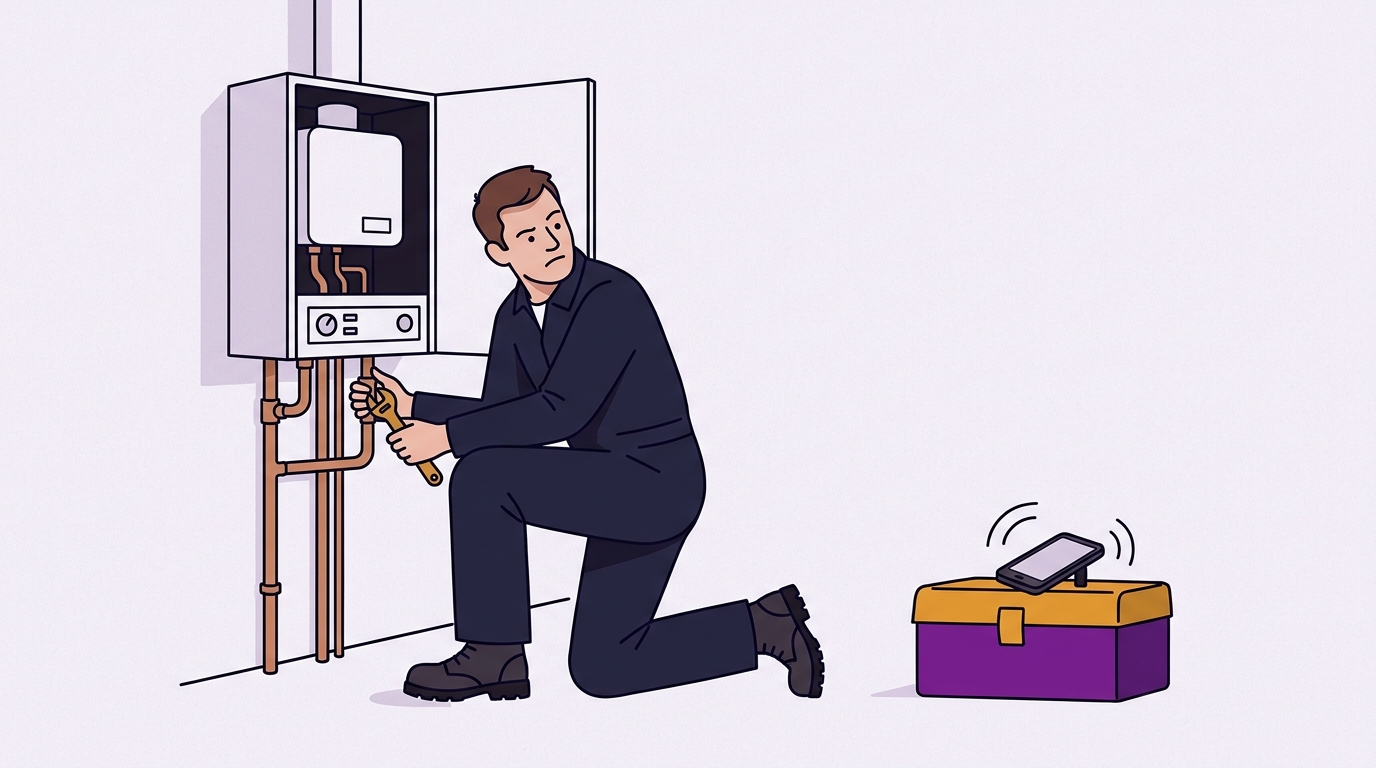

Stop paying per call for handwritten messages that turn urgent boiler and air conditioning leads into dead callbacks.
A generic HVAC answering service fails UK heating and cooling firms because shared operators only take messages—they cannot check live engineer diaries, confirm postcode coverage, or tell a burst pipe from a routine filter question. By the time your office reads an emailed note and calls back an hour later, the homeowner has already booked another firm. Replacing a message-taking bureau with a dedicated front-desk system built for field service turns first-ring pickups into confirmed jobs on the first call.
This is Day 12 of our 15-Day HVAC Systems Series. On Day 11, we broke down the £120,000 missed-call leak and why answering on the first ring matters. Many UK owners try to fix missed calls with a traditional telephone answering bureau, only to find that a polite voice taking a name and number still leaks work every winter.
Where a generic call centre breaks down on HVAC calls
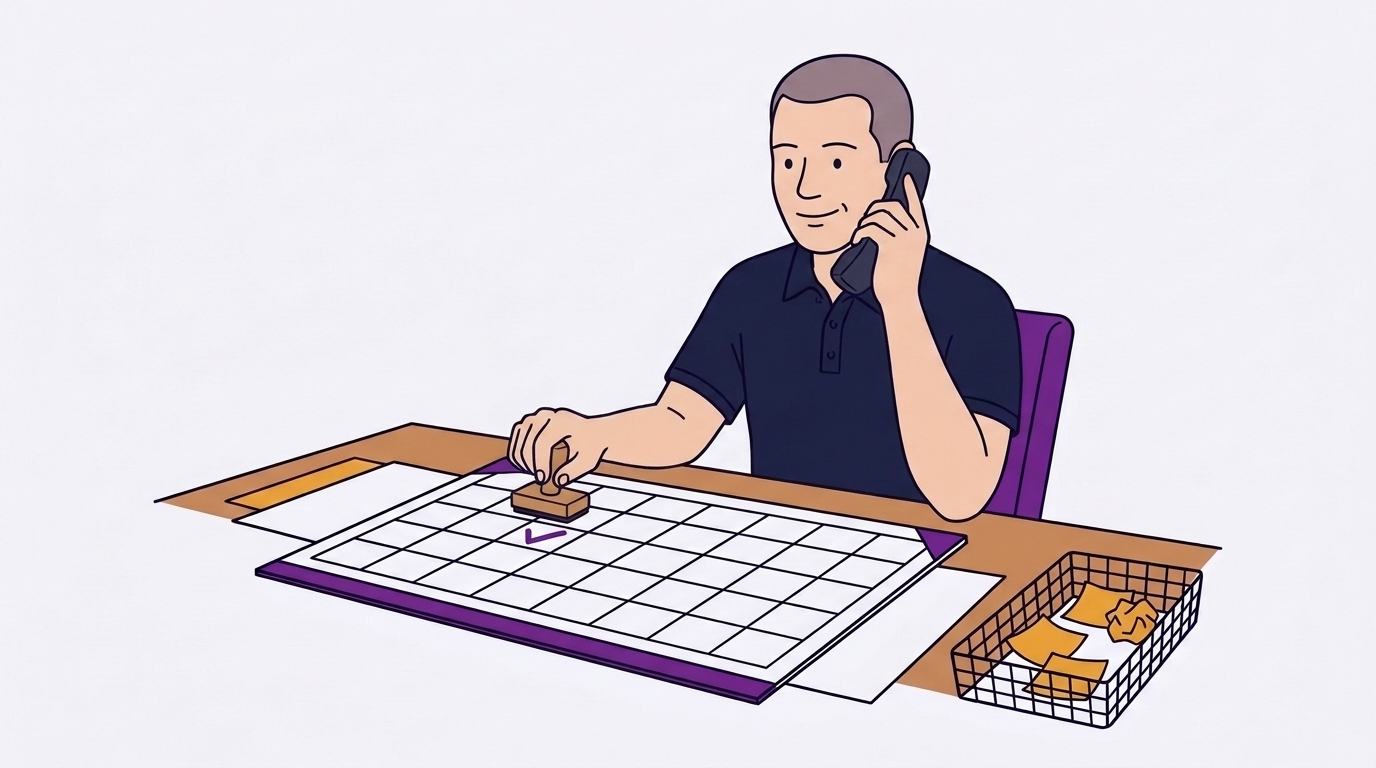
When a shared operator picks up your phone, they are switching screens between a solicitor, a dental clinic, and a landscaper. They follow a three-line script with zero experience in heating, ventilation, or air conditioning.
In day-to-day UK operations, outsourced message bureaux fail in four predictable ways:
- Zero technical judgement: Operators cannot separate a tripped breaker or leaking condensate pipe from a full boiler lockout in freezing weather. Everything lands as “urgent” or “please call back,” forcing your office to phone the caller again.
- Misspelled UK postcodes: An operator unfamiliar with your patch logs
GU21asGU24or mangles a street name. One typo breaks the clustered postcode zones you built on Day 3 and sends an engineer twenty minutes off-route. - Hold queues during weather snaps: When a January freeze hits, every trades firm on the bureau's roster gets flooded together. Contact centre benchmarks from Zendesk and Klipfolio put normal abandonment at 5% to 8%, with anything over 10% signalling overloaded queues—and urgent callers drop off fast after 60 to 90 seconds on hold.
- Zero diary visibility: Without access to your job-management calendar, operators cannot offer an arrival window or confirm your call-out fee. The caller hangs up unsure whether anyone is coming.
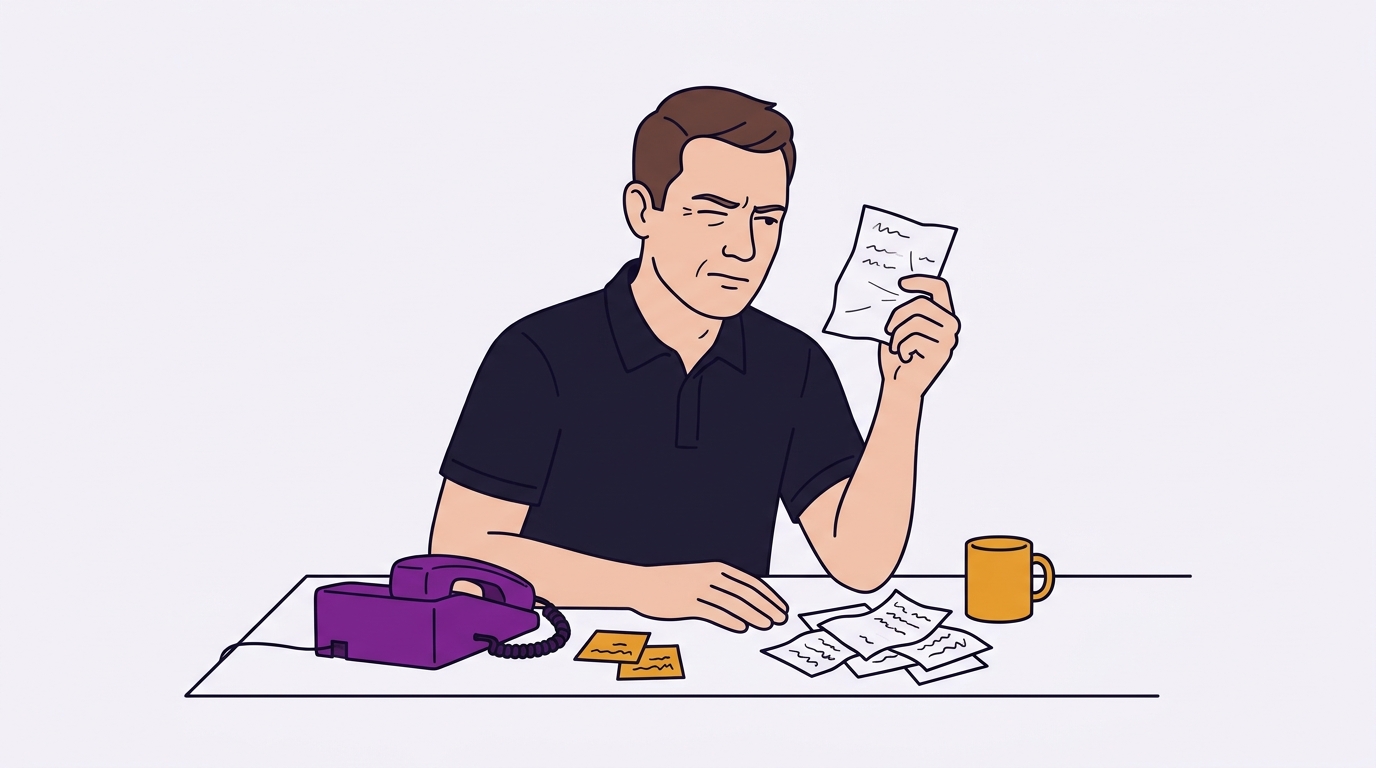
When we audit call logs for UK heating and cooling teams, the same pattern appears every time: the owner thinks the phone is covered, yet dispatchers still spend two hours each morning decoding vague message slips.
The hidden cost of paying to take messages
On paper, outsourced answering looks cheap. UK providers such as Answer.co.uk, PocketReceptionist, and RealTimeReception typically charge £1.75 to £2.20 per call on pay-as-you-go plans, or £130 to £230 per month ex VAT for around 100 calls, plus £1.70 to £2.99 per overage call.
The real cost is not the £2 answering fee. It is the conversion cliff caused by delayed callbacks.
Invoca's Home Services Call Benchmarks show live answer rates average 52% across home services, dropping to 34% in HVAC during seasonal peaks. Even when a bureau answers, HVAC call-handling benchmarks show delayed message-relay leads convert at just 2% to 5% because urgent homeowners rarely wait for a callback. Compare that with ServiceTitan's Home Services Benchmarks, where average contractors book 42% of qualified calls—and top firms convert 80% to 90% on the first call.
If a bureau charges £200 a month to answer 100 calls, writes 100 messages, and your office only catches 25 people before they hire a competitor, you paid £200 to watch £15,000+ in repairs and boiler quotes walk away.
Side-by-side: Answering service vs. dedicated front desk
Here is how a traditional outsourced bureau compares with a purpose-built front-desk system designed around HVAC operations:
| Operational Factor | Generic Answering Service | Dedicated HVAC Front Desk |
|---|---|---|
| Primary Outcome | Writes a message and emails your office | Qualifies the fault and books the slot |
| Postcode Checks | Manual typing; frequent typos and slips | Automatic UK postcode check by zone |
| Call-Out Pricing | Rarely shares rates; promises a callback | States standard diagnostic rates clearly |
| Diary Access | Blind to live availability or capacity | Syncs with live slots and daily limits |
| Weather Surges | Shared queue; hold times and hang-ups | Instant pickup on unlimited rings |
| Conversion Rate | 2% to 5% on delayed callback notes | Captures booked jobs live on the call |
| Cost Model | Per-call fees that spike in peak season | Predictable flat monthly system cost |

What a dedicated HVAC front-desk system does instead
A purpose-built front-desk system does not act like a switchboard. It operates like a calm dispatcher who already knows your business rules before the phone rings.
When a homeowner calls at 7:45 PM with no heating, the system picks up on the first ring, checks their UK postcode against your coverage map, and confirms they accept your standard diagnostic call-out rate. Next, it reads your live engineer diary and completes a live booking inside the right geographic cluster—so the caller hangs up with a confirmed arrival window and an instant SMS confirmation.
That single shift wipes out the morning callback pile-up. Your office staff stop chasing cold phone numbers and focus on commercial quotes, parts orders, and customer care.
Paired with purpose-built AI voice agents, your front door stays open across lunch breaks, bank holidays, and cold snaps with zero per-minute surprises. Explore how this connects to your wider dispatch engine on our HVAC automation solutions page.
FAQ
Why can't a generic answering service book directly into our HVAC calendar?
Shared bureaux serve hundreds of unrelated businesses at once, so their operators do not hold logins to your field-service software or know your zone rules. Without live calendar access, they can only record a name, number, and short note for your office to re-enter and call back later.
How much does a UK HVAC answering service cost?
Standard UK pay-as-you-go answering plans cost £1.75 to £2.20 per call excluding VAT, while 100-call monthly bundles run £130 to £230 plus £1.70 to £2.99 per overage call. The bigger hidden cost is lost revenue when urgent callers hire a competitor instead of waiting for a callback.
Can an outsourced call bureau handle urgent boiler or AC emergencies?
Rarely well. Operators follow brief, non-technical scripts and struggle to separate a genuine safety risk or freezing home from a routine servicing query. They either wake your on-call engineer for minor questions or leave a true emergency sitting in an email inbox overnight.
When should our human office team still handle a call?
Human dispatchers are best reserved for nuanced conversations: complex commercial tenders, sensitive warranty disputes, distressed callers needing personal reassurance, or multi-system replacement negotiations. Offloading routine intake and out-of-hours scheduling frees your team to handle those moments properly.
Ready to replace a message-taking HVAC answering service with live, first-call scheduling? Book a Front-Door Call Audit with Axontick to review your call-handling leaks and build a 24/7 front desk around your postcodes and live diary.
Next: Day 13 of our 15-Day HVAC Systems Series
Emergency Triage (Separating the £8,000 Replacement from the £40 Filter) — Answering every call is step one, but how do you protect on-call engineers from midnight burnout while capturing high-value breakdowns? See how the 3-Question Urgency Filter works.
Want this deployed for your enterprise?
Axontick engineers architect, benchmark, and deploy custom enterprise autonomous systems with guaranteed uptime, sub-second latency, and 100% IP ownership.

Muhammad Asim
Founder @ AxontickFounder of Axontick, specialized in AI automation, Multi-Agent Systems, and enterprise-grade voice agents. Expert in bridging the gap between complex AI technology and practical business solutions.