
Lock in heating and cooling appointments on the very first call without manual scheduling friction.
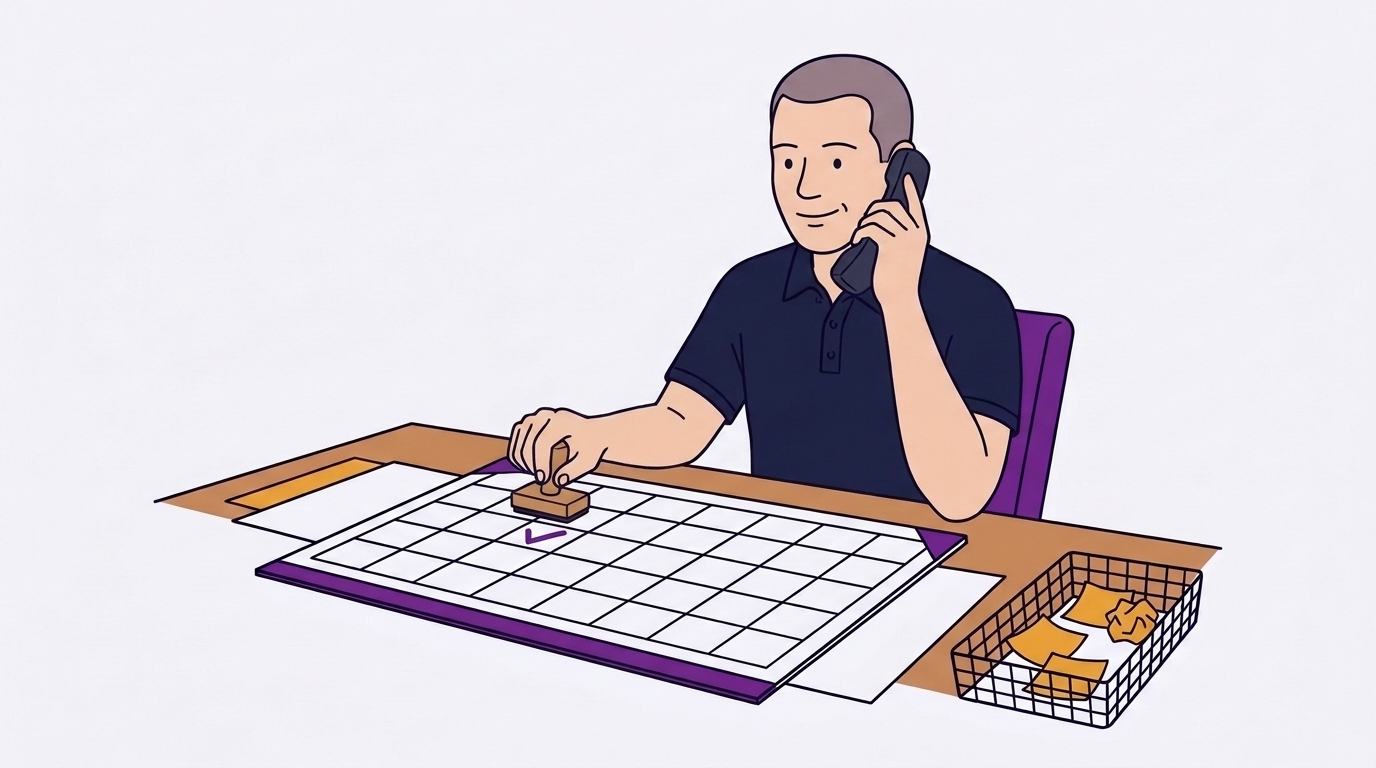
Direct HVAC calendar booking lets a customer pick a real arrival window on their first call or web visit and writes the job straight into your dispatch diary. Instead of taking a message and chasing the homeowner for two days, the system checks your engineer postcode zones, confirms the job duration, and sends an instant text confirmation. You lock in high-intent jobs in 90 seconds while competitors are still checking voicemails.
This is Day 14 of our 15-Day HVAC Systems Series. On Day 13, we looked at how emergency triage separates urgent breakdowns from routine calls. Qualifying the job is half the battle—now we look at how to book it on the spot before the caller dials someone else.
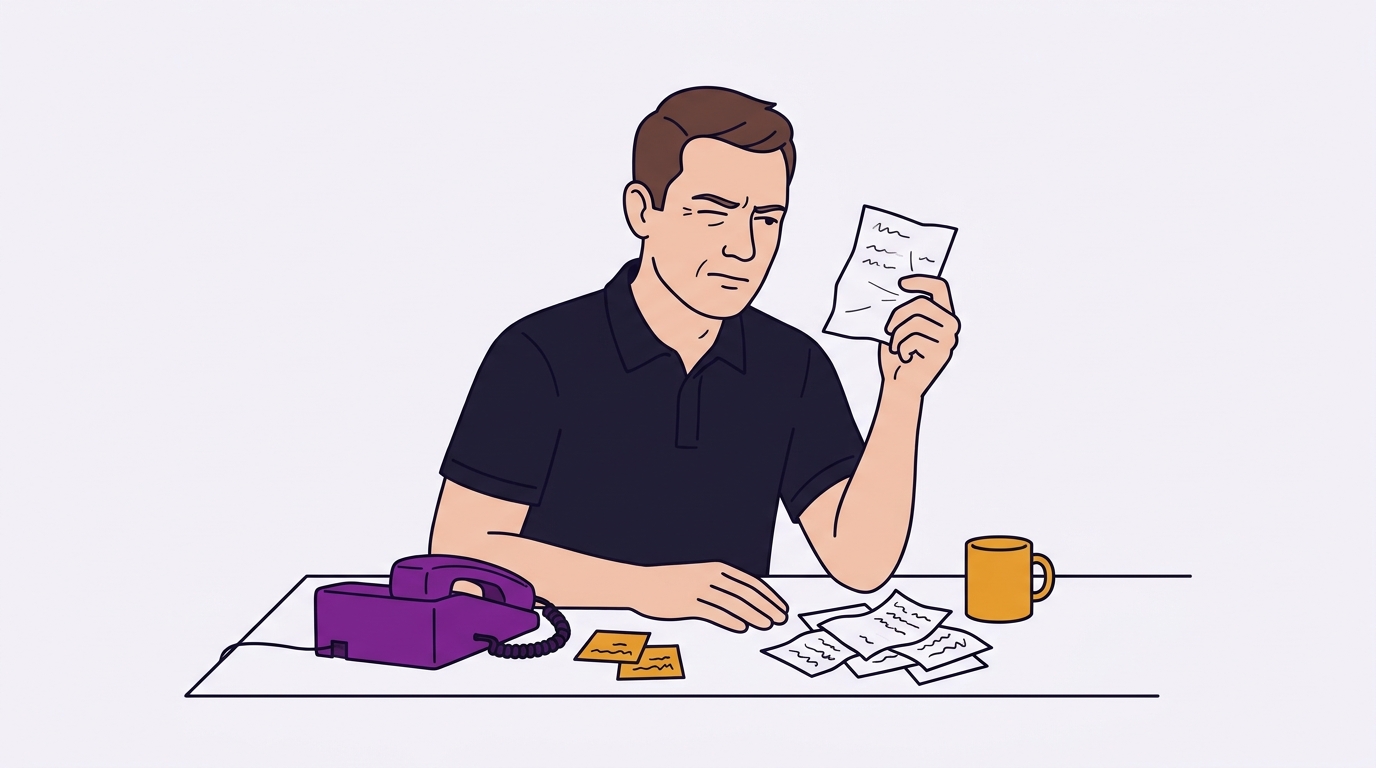
Why 48-hour phone tag kills your best leads
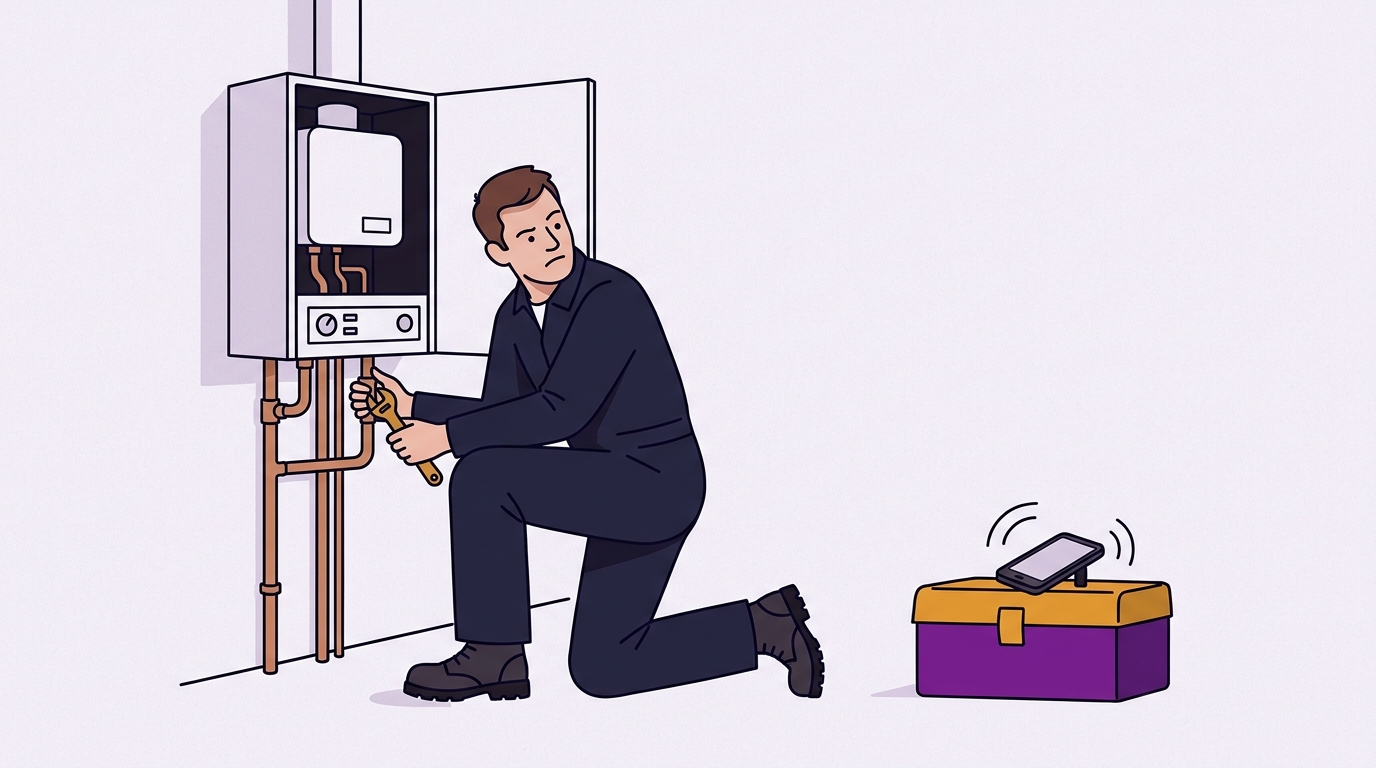
When a homeowner's boiler locks out or an office air conditioning unit trips on a warm afternoon, they do not wait patiently for a callback. Industry benchmarks from Casey Response and Foundry CRO show that roughly 78% of homeowners hire the first business that responds to them.
The traditional callback loop breaks down in four predictable steps:
- The enquiry lands when your team is stretched. Fix Radio research reported in PHAM News found that 60% of UK tradespeople struggle to answer the phone while on tools or driving.
- Callers refuse to leave voicemails. UK studies from Quality Company Formations show 70% to 80% of callers who hit voicemail hang up without a message, and 85% of missed callers never call back.
- Callbacks arrive too late. Salescadia speed-to-lead benchmarks show replying within five minutes makes you 21 times more likely to qualify a lead than waiting 30 minutes—and replying under one minute lifts conversions by up to 391%.
- Even reached leads get stuck in callback delays. Your office rings back at 2:00 PM while the customer is in a meeting. They ring back at 5:30 PM after your desk closes. By Wednesday, 48 hours have vanished and they have booked another local firm.
Home service metrics from SupplyHT and Foundry CRO show phone leads convert at around 46% overall, and 37% book directly on the first call. Every time you push a ready buyer into a callback queue, you lose your highest-converting moment.
How live slot matching books jobs in 90 seconds
Real-time scheduling removes the back-and-forth by checking your live dispatch board while the customer is on the line or on your site. Instead of promising a callback, the front desk offers two concrete arrival windows that fit your engineers' routes.
Here is how a 90-second first-call booking works:
- Capture postcode and job type. Confirm the caller is in your service area and whether they need a 45-minute diagnostic, a 60-minute service, or a two-hour heat pump survey.
- Check live zone availability. Using your postcode cluster zones, filter for engineers already working nearby that day so nobody drives across town for one afternoon call.
- Offer two exact arrival windows. Offering two clear choices ("Tuesday 10:00 AM–12:00 PM, or Wednesday 8:00 AM–10:00 AM") helps homeowners decide in seconds.
- Write to the diary and send SMS confirmation. Once the caller picks a window, the job locks into your dispatch board and sends an instant confirmation text.

Guardrails that keep your diary clean
Many UK heating and cooling owners hesitate to allow direct booking because they fear double-bookings or zig-zagging drives. That only happens when a calendar has no operational rules.
Four guardrails keep your dispatch board tight:
- Postcode zone locking: Offer slots in an area only on days your vans are already in that cluster. Out-of-area postcodes are politely declined or routed for review.
- Built-in travel buffers: Add a 30-minute buffer between appointments automatically so a slow repair never makes your engineer late to the next job.
- Hard daily job caps: Tie booking rules to your daily capacity number. Once a day hits its safe limit of wrench hours, the system offers the next open day instead of overloading your team.
- Credential matching: Route boiler breakdowns only to Gas Safe engineers, commercial chillers only to F-Gas staff, and full quotes only to senior surveyors.
With these rules underneath your calendar, direct booking is more disciplined than a rushed receptionist scribbling notes on a pad during a busy Monday morning.
Connecting to your UK dispatch software
You do not need to rip out your existing job management platform to stop losing leads to callback delays. Most UK HVAC and plumbing firms already run a core system that supports two-way diary syncing or booking links.
| UK Platform | Best Fit | How Direct Booking Connects | Key UK Strength |
|---|---|---|---|
| ServiceM8 | Growing teams (1–15 staff) | Built-in online booking widget + live drag-and-drop dispatch board | Fast mobile app; clean Xero & QuickBooks sync |
| Commusoft | Domestic & commercial (5–50+ staff) | Colour-coded live diary, travel-time rules & customer portal | Built for UK Gas Safe (CP12) & F-Gas tracking |
| Simpro | Medium-to-large commercial (15+ staff) | Skill-matched scheduling module & asset-linked dispatch | Deep job costing, quoting & multi-stage projects |
| Joblogic | Compliance-heavy HVAC & FM | Real-time engineer scheduler & automated customer alerts | Strong planned preventative maintenance workflows |
The gap for most firms is not the software—it is the phone. Web widgets capture homeowners browsing at 9:00 PM, while AI voice agents answer inbound calls on the first ring, read your live diary, and book jobs straight into the same schedule. Explore how front-desk booking connects with your wider shop systems on our HVAC automation solutions page.
FAQ
How does direct-to-calendar booking work for phone callers?
An intelligent front-desk system answers on the first ring, asks the caller's postcode and heating or cooling issue, checks your live dispatch diary, and offers two open arrival windows. Once the caller chooses a slot, it books the job and sends an SMS confirmation immediately.
Will automated booking cause double-bookings or long drives?
No, provided you set postcode zone rules and travel buffers first. The scheduler only offers slots in areas where an engineer is already working that day, adds a 30-minute buffer between jobs, and stops offering slots once your daily capacity limit is reached.
Do we need to replace ServiceM8, Commusoft, or Simpro?
No. Direct booking sits in front of your existing UK field-service software using two-way calendar sync or API connections. Your office team and engineers keep using the exact same dispatch board, job cards, and mobile apps they already know.
Should emergency breakdowns book into the same calendar as routine services?
No. Out-of-hours safety hazards and total heating lockouts should pass through your three-question urgency filter first so they alert the on-call engineer immediately, while routine servicing and non-urgent repairs book straight into standard daytime slots.
Ready to stop losing high-intent callers to 48-hour callbacks? Book a Front-Door Call Audit with Axontick to put HVAC calendar booking in front of your dispatch diary.
Coming next: Day 15 of our 15-Day HVAC Systems Series
The Self-Running HVAC Company (The Complete Connected Machine) — Tomorrow we bring all 14 days together into one master blueprint connecting your front desk, dispatch board, and customer retention engine.
Want this deployed for your enterprise?
Axontick engineers architect, benchmark, and deploy custom enterprise autonomous systems with guaranteed uptime, sub-second latency, and 100% IP ownership.

Muhammad Asim
Founder @ AxontickFounder of Axontick, specialized in AI automation, Multi-Agent Systems, and enterprise-grade voice agents. Expert in bridging the gap between complex AI technology and practical business solutions.