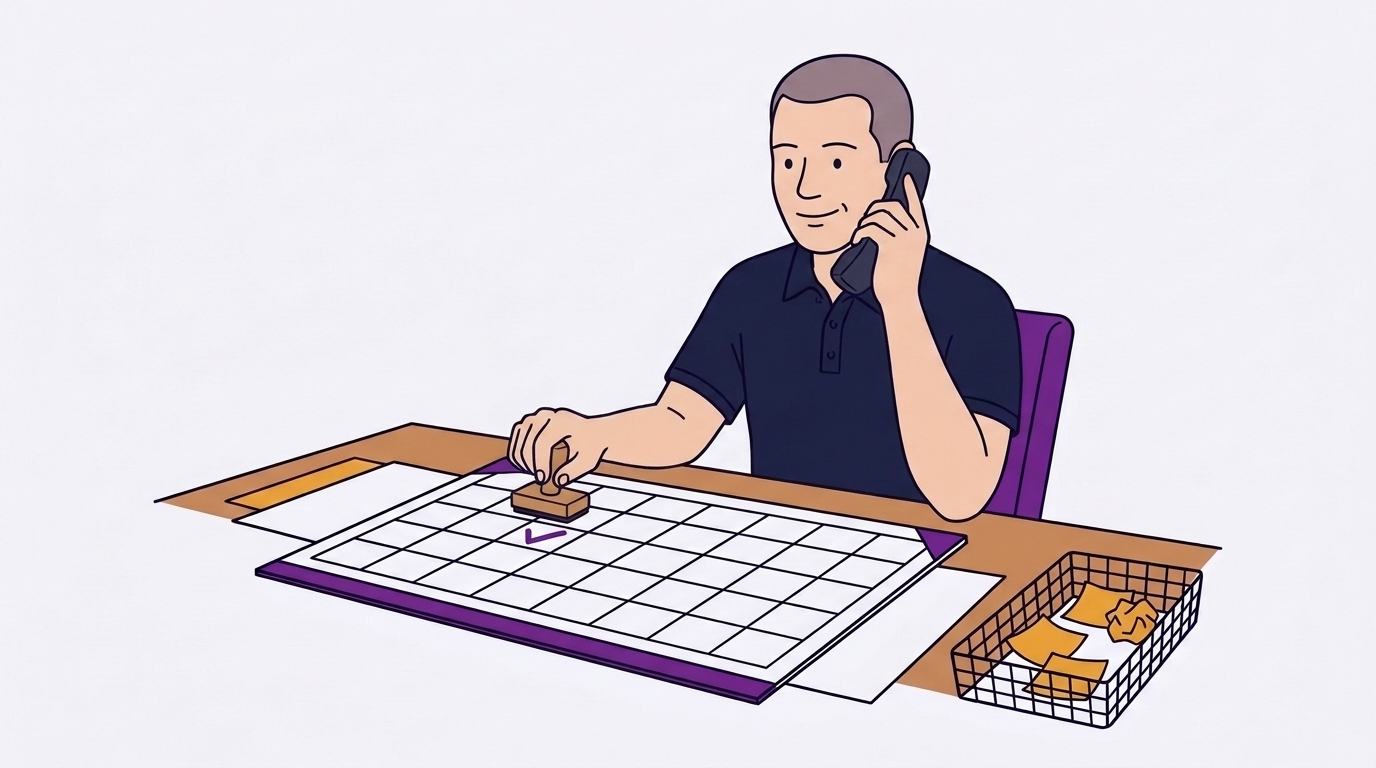


In January and July, your phone never stops ringing. In April and October, engineers stand around the yard sweeping floors while van leases, wages, and insurance bills keep leaving your bank account.
The fastest way to fix the shoulder season slump is to move customers onto HVAC maintenance agreements that auto-book routine visits in spring and autumn. Instead of waiting for boilers or air conditioning units to break during extreme weather, you collect steady monthly payments and fill quiet weeks months in advance.
This is Day 8 of our 15-Day HVAC Systems Series. On Day 6, we stopped quote leakage, and on Day 7, we turned finished jobs into Google reviews. Today we smooth out the revenue rollercoaster.
Why reactive HVAC businesses lose money twice a year
Most heating and cooling companies run on emergency breakdowns. When a frost hits in winter or a heatwave arrives in summer, every van is booked solid and cash pours in.
Then mild weather arrives in March through May and again in September through November. Homeowners stop thinking about their heating or cooling, so inbound calls drop off a cliff.
The problem is that your costs do not drop with the weather. You still pay full-time wages, van finance, fuel, and office rent every single month. Those four to five quiet months quietly eat away the profits you worked flat-out to earn in winter and summer.
Even worse, when you let good engineers go during a slow spring, you cannot hire them back in time for the next cold snap.
The Preventive Agreement Engine explained
A preventive maintenance plan flips the calendar around. Instead of selling one-off annual visits that customers forget to book, you offer a simple monthly care plan paid by Direct Debit.
In return, your team looks after the customer's equipment twice a year—or once a year for domestic boilers—during the exact weeks you need work most:
- Spring visits (March to May): Routine air conditioning servicing, filter changes, and heat pump checks before summer warmth arrives.
- Autumn visits (September to November): Pre-winter boiler safety checks, heating system flushes, and commercial plant inspections before the first frost.
For UK contractors, aligning your checklist with recognised standards like BESA's SFG20 maintenance schedules and CIBSE seasonal commissioning guidance gives commercial landlords and homeowners clear proof that their warranty and legal duties are covered.

Why spreadsheets fail and automation wins
Many HVAC owners try selling service plans once, track them in a spreadsheet, and then wonder why half the customers disappear after year one.
When the office has to remember who is due for a visit, send manual invoices, and chase expired bank cards by phone, things slip through the cracks during busy weeks.
Data from ServiceTitan's service agreement benchmarks shows how big that gap is. Contractors using fully manual renewal tracking average just a 29.8% renewal rate. Turning on automatic renewals lifts that to 42.4%, and pairing auto-renewal with automated email and text reminders pushes average renewals to 49.1%—nearly 65% higher than manual chasing.
Across the wider trade, top-performing residential membership programs target an 86% annual renewal rate, according to Contracting Business industry benchmarks. Reaching that level means your recurring base grows every year without buying extra ads.
| Model | Spring & Autumn Schedule | Cash Flow Predictability | Office Admin Effort |
|---|---|---|---|
| Reactive call-outs only | Quiet weeks, idle vans | Sharp winter/summer swings | Low in spring, frantic in winter |
| Manual spreadsheet plans | Forgotten during busy months | Unstable (high drop-off) | Heavy manual calling and invoicing |
| Automated Agreement Engine | Auto-filled months ahead | Steady monthly baseline | Light (system sends slots & bills) |
A simple formula for your monthly baseline
You do not need thousands of members to feel the difference. Look at what a modest plan base covers for a four-van UK heating and cooling firm:
Monthly Recurring Baseline
Rmonthly = Nmembers × Pplan
Example: 300 homes × £22/month = £6,600 guaranteed every month before a single emergency call arrives.
Even better, routine visits uncover worn parts, failing pumps, and ageing boilers before they fail completely. You quote those repairs calmly during a quiet Tuesday in April instead of turning away work in December.
How to set up your engine in three steps
Keep the system simple so both your office team and your customers actually use it:
- Offer one clear plan: Include an annual or twice-yearly service, priority call-out status, and a modest discount on repairs. Avoid confusing multi-tier menus.
- Lock in automatic booking windows: When a customer joins, tag their next visit for a quiet shoulder month (March–May or September–November). Thirty days beforehand, let your system text them two open time slots to tap and confirm.
- Automate card updates and renewals: Use Direct Debit or recurring card billing that automatically reminds customers when a card is about to expire, so memberships do not silently lapse.
One practical lesson from real HVAC deployments: never let members book their routine annual service during peak January freeze or July heatwave weeks. Keep peak weeks open for high-margin emergency breakdowns, and reserve shoulder months for plan visits.
If you want help connecting your job software, automated booking texts, and recurring billing without adding office headcount, explore Axontick's workflow automation service.
FAQ
When should HVAC companies schedule maintenance plan visits?
Schedule air conditioning and cooling checks in spring (March to May) and boiler or heating checks in autumn (September to November). Keeping routine visits in shoulder months keeps vans busy all year and leaves peak winter and summer weeks free for urgent breakdowns.
What should a simple HVAC maintenance agreement include?
Keep it easy to understand: one or two planned service visits per year, priority booking when something breaks, and a small member discount (such as 10% off repairs). Simplicity sells much faster at the door than complicated bronze, silver, and gold tiers.
Why do manual maintenance plans fail to renew?
Without automated reminders and recurring billing, office staff get too busy during peak seasons to chase renewals or update expired bank cards. Industry benchmarks show automated renewals with email and text reminders lift renewal rates by nearly 65% compared to manual tracking.
Ready to flatten your seasonal cash dips? Schedule an Operations Audit to connect your service plans, shoulder-month scheduling, and recurring billing, or explore our HVAC automation solutions.
Coming next: Day 9 of our 15-Day HVAC Systems Series
The "Ghosted Job" Goldmine — How to wake up past customers in your database and book 10 to 25 high-margin jobs in 48 hours without spending a penny on ads.
Want this deployed for your enterprise?
Axontick engineers architect, benchmark, and deploy custom enterprise autonomous systems with guaranteed uptime, sub-second latency, and 100% IP ownership.

Muhammad Asim
Founder @ AxontickFounder of Axontick, specialized in AI automation, Multi-Agent Systems, and enterprise-grade voice agents. Expert in bridging the gap between complex AI technology and practical business solutions.