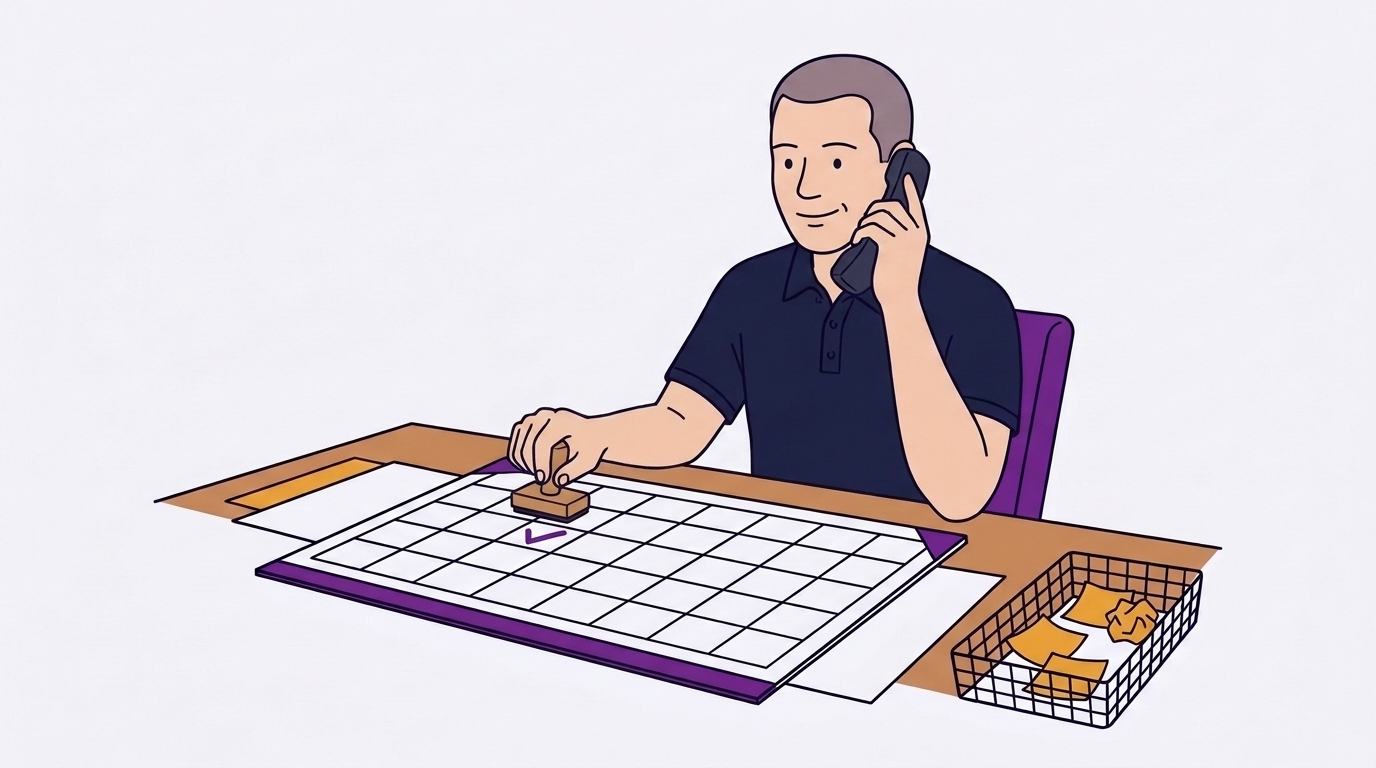


A practical roadmap for UK heating and cooling owners ready to step away from constant firefighting.
A complete HVAC operations blueprint connects three everyday engines—your front desk, your dispatch board, and your customer follow-up—so enquiries, repairs, invoices, and reviews move forward without you chasing every step. Instead of acting as the switchboard for missed calls, van stock questions, and overdue quotes, you set clear rules once and let your team run them.
This is Day 15—the finale—of our 15-Day HVAC Systems Series. On Day 14, we covered direct-to-calendar booking to end 48-hour phone tag. Today, we connect all 14 previous steps into one calm machine.
Why owner burnout happens when systems don't talk
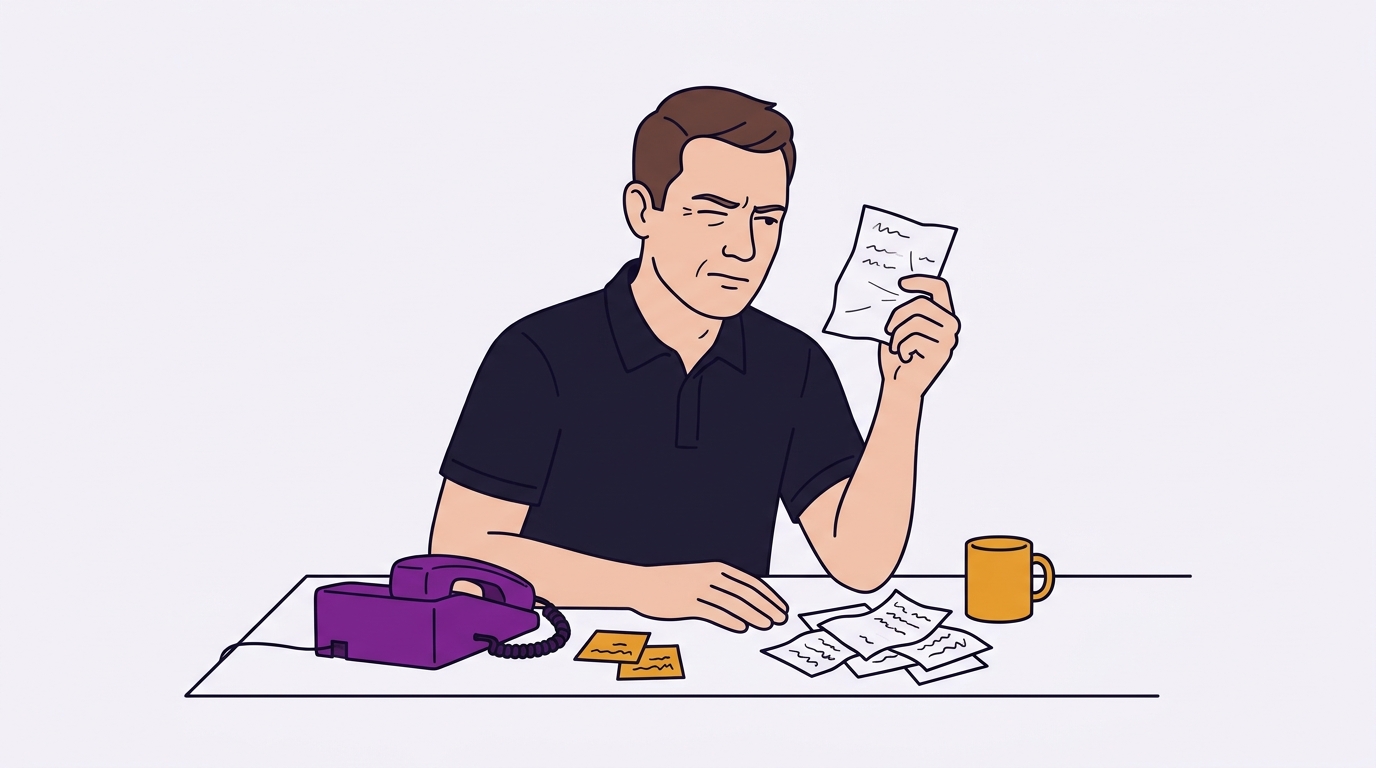
Picture Saturday evening at dinner. Your mobile rings—an engineer is locked out of a plant room, a customer is chasing a quote, and nobody knows if a van carries the right fan motor.
Adding more vans onto disconnected spreadsheets and WhatsApp groups only multiplies the noise. When your diary, van stock, and quotes live in separate places, owner burnout is guaranteed because your brain becomes the only bridge between them.
Breaking out of that trap starts with two management rules:
- Audit your interruptions for one week. Write down every question your team brings you. Hand £150 decisions (waiving a call-out fee, ordering a standard part, swapping a morning slot) to your office manager and lead engineers.
- Replace memory with simple checklists. When repeatable tasks—from answering a breakdown call to closing a job at the kerb—follow a written rule, your company runs the same way whether you are on site or away.
The connected 3-part engine
A calm, scalable heating and cooling company is built on HVAC business systems that pass work cleanly from one stage to the next without manual re-typing. Every job moves through three connected parts:
- The Front-Door Engine (Capture & Book): Every inbound call is answered on the first ring, 24 hours a day. An intelligent front desk runs a 3-question emergency triage to separate real safety hazards and freezing lockouts from routine filter queries. Non-urgent callers see live postcode availability and book straight into your diary in 90 seconds.
- The Inside Shop (Dispatch & Curb Close): Confirmed jobs land on one Single Truth Board with a complete 30-second job card—access codes, boiler or unit details, and customer notes. Jobs are grouped by postcode cluster zones so vans stop criss-crossing town. When the engineer finishes, they tap used parts for tomorrow's warehouse restock box and complete a 60-second curb close with site photos, customer sign-off, and payment via ServiceM8, Commusoft, Simpro, or Joblogic synced to Xero or QuickBooks.
- The Follow-Through Machine (Retention & Cash Flow): Closing a job triggers the next loop automatically. Fifteen minutes after sign-off, the homeowner receives a polite SMS link to leave a Google review. Open replacement quotes enter a 3-touch follow-up sequence, while preventive maintenance agreements fill quiet spring and autumn weeks alongside Gas Safe and REFCOM F-Gas compliance checks.

Benchmarks of a self-running UK HVAC firm
When these three engines share one set of rules, the shift shows up quickly in your weekly numbers. Industry benchmarks from BESA, CIBSE, and the SFG20 maintenance standard show a sharp gap between reactive shops and connected UK contractors.
| Operational Metric | Reactive Firefighting Shop | Connected Self-Running Firm | Source / UK Benchmark |
|---|---|---|---|
| Engineer Utilization Rate | 65%–72% (industry average) | 75%–82% (top quartile) | BESA / CIBSE UK benchmarks |
| Admin Overhead per Tech | 20%–25%+ (paper & chasing) | 12%–15% (mobile job cards & curb close) | BESA / UK CDM & F-Gas compliance |
| Travel & Windshield Time | 25%+ (cross-town zig-zagging) | ~15% (postcode cluster routing) | UK field-service fleet benchmarks |
| First-Time Fix Rate (FTFR) | Under 70% (missing van parts) | 75%–85% (1-tap van restock loop) | UK HVAC service contract benchmarks |
| PPM Schedule Adherence | Ad-hoc / spreadsheet reminders | >95% on-time compliance | SFG20 UK maintenance standard |
Those extra percentage points are pure margin. Raising engineer utilization from 68% to 78% across a six-van fleet adds roughly 24 billable hours every single week—without hiring another technician or buying another van.
Self-assessment checklist: where is your machine leaking?
You do not need to rebuild your entire company in one weekend. Score your business honestly against these six questions to find the single leak costing you the most time and cash today:
- Front Door: If a homeowner calls at 12:30 PM on Tuesday or 8:00 PM on Saturday, do they reach a knowledgeable voice on the first ring—or hit voicemail?
- Triage & Booking: Can a routine caller book a confirmed arrival window in their postcode zone on the first call without waiting 48 hours for a callback?
- Dispatch & Routing: Do your engineers spend more than 20% of their day driving across town because jobs are booked first-come, first-served instead of by neighbourhood cluster?
- Van Stock & Job Cards: Do engineers arrive on site with access notes and unit history ready, or burn 90 minutes driving to the trade counter for common parts?
- Invoicing & Quotes: Are jobs signed off and paid at the kerb, and does every £5,000+ boiler or heat pump quote get followed up automatically on Days 1, 3, and 7?
- Seasonality & Compliance: Are your spring and autumn weeks filled by recurring service agreements and automated Gas Safe or F-Gas reminders?
Pick the one area where you answered "no" and fix that loop first. Once that piece runs smoothly, connect the next one.
FAQ
Where should a UK HVAC owner start when building connected systems?
Start where the daily pain is loudest, or fix your inside shop before opening the marketing tap. Standardizing job cards, postcode cluster routing, and curb-close invoicing takes one to two weeks and stops new leads from landing on a chaotic dispatch board.
Do we need to replace ServiceM8, Commusoft, or Simpro?
No. Most UK heating and cooling firms already have strong core dispatch software. The missing piece is usually the rules and automation sitting around it—connecting your phone lines, live calendar booking, van restock lists, and quote follow-ups into the diary you already use.
How can an owner step back from after-hours on-call duty safely?
Put a structured 3-question urgency filter in front of your night number. Real safety hazards and freezing lockouts route straight to the on-call engineer with full site details, while filter questions and routine bookings schedule into tomorrow's morning calendar without waking anyone.
How long does it take to see measurable results from connected systems?
Most firms see immediate relief within 30 days. Answering every call on the first ring and automating quote follow-ups captures lost revenue in week one, while postcode routing and curb-close invoicing typically reclaim 5 to 10 hours of owner and office admin every week.
Ready to put this HVAC operations blueprint to work in your own business? Explore our HVAC automation solutions or book a free systems audit with Axontick to map your biggest operational leaks and build a calmer, self-running firm.
Want this deployed for your enterprise?
Axontick engineers architect, benchmark, and deploy custom enterprise autonomous systems with guaranteed uptime, sub-second latency, and 100% IP ownership.

Muhammad Asim
Founder @ AxontickFounder of Axontick, specialized in AI automation, Multi-Agent Systems, and enterprise-grade voice agents. Expert in bridging the gap between complex AI technology and practical business solutions.