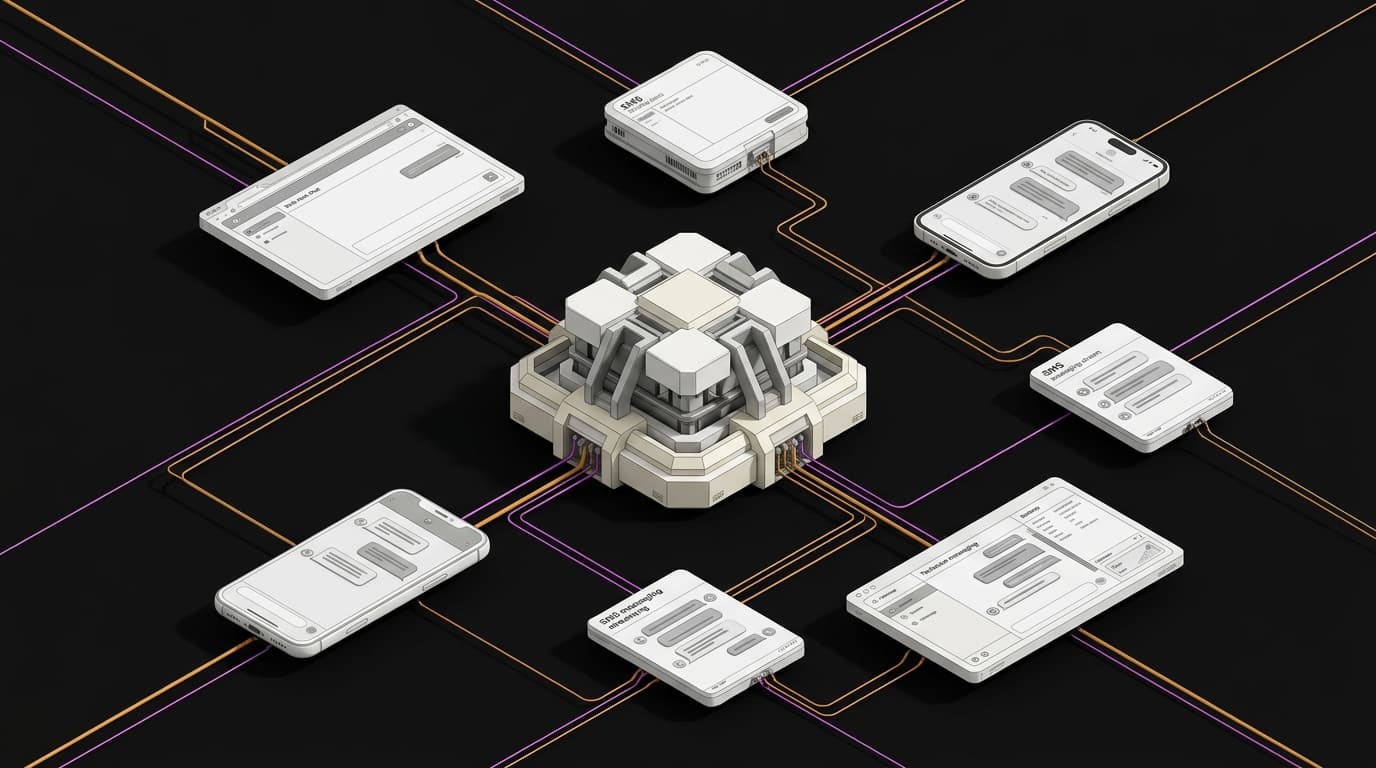
Deploying omnichannel AI chatbots enables modern enterprises to unify customer conversations across Web, WhatsApp, SMS, and Slack into a single stateful intelligence layer with zero context loss.
Deploying omnichannel AI chatbots transforms fragmented customer communication into a continuous, state-aware operational system. In modern customer journeys, users rarely interact along a single linear touchpoint. A prospect might initiate a product inquiry on a mobile web browser, confirm an appointment window over WhatsApp, verify a payment status via SMS, and trigger an internal escalation that a human agent reviews in Slack. When customer service operations rely on isolated, channel-bound chatbots, each transition forces the customer to start over from scratch, degrading user trust and increasing manual support overhead.
By shifting from isolated perimeter widgets to a centralized conversational architecture, enterprise conversational systems eliminate these communication silos. When backed by persistent session state and bi-directional CRM synchronization, organizations reliably achieve automated first-contact resolution rates between 52% and 68% on routine tier-1 inquiries, as measured in Gartner's Enterprise Conversational AI Benchmark Report (2024–2025).
Following our technical blueprints on What Are AI Agents?, our 5-Point AI Feasibility Matrix, and Multi-Agent Systems for Enterprise, this guide examines the core architecture, data schemas, state persistence layers, and real-world engineering edge cases required to build production-ready autonomous customer support fleets.
┌────────────────────────────────────────────────────────────────────────┐
│             MULTICHANNEL SILOS VS. UNIFIED OMNICHANNEL ENGINE          │
├───────────────────────────────────┬────────────────────────────────────┤
│    TRADITIONAL MULTICHANNEL       │     UNIFIED OMNICHANNEL AI         │
├───────────────────────────────────┼────────────────────────────────────┤
│ • Disparate bot per channel       │ • Single sovereign intelligence    │
│ • Zero cross-platform memory      │ • Centralized Redis session state  │
│ • Customer repeats info (73%)     │ • Seamless cross-channel continuity│
│ • Fragmented CRM logging          │ • Real-time bi-directional sync    │
│ • Rigid rule-based decision trees │ • Dynamic LLM reasoning & tools    │
│ • Opaque human handoff drops      │ • Contextual ticket injection      │
└───────────────────────────────────┴────────────────────────────────────┘
Multichannel vs. Omnichannel Chatbots: The Architectural Divide
Understanding the distinction in a multichannel vs omnichannel chatbot deployment is fundamental for enterprise engineering teams. Many companies believe they offer an omnichannel customer experience simply because they have active touchpoints across Web, WhatsApp, and SMS.
In practice, the vast majority of these systems run as independent multichannel silos:
- Fragmented Session Boundaries: The web widget tracks an ephemeral browser cookie; the WhatsApp integration references an E.164 telephone number; the SMS gateway processes raw incoming payloads without thread history.
- The Repetition Friction: According to the Zendesk Customer Experience Trends Report (2024–2025), 73% of consumers express acute frustration when forced to repeat their account details and issue history to different representatives or systems across channels.
- Data Desynchronization: If an existing customer opens a ticket on web chat and checks status two hours later on WhatsApp, a multichannel bot cannot associate the two interactions, erroneously treating the user as a new contact.
When comparing a multichannel vs omnichannel chatbot, the core differentiator is shared, persistent state. Rather than deploying disconnected bots at each interface, an omnichannel system routes every incoming message through a payload normalization gateway into a unified dialogue engine.
┌────────────────────────────────────────────────────────────────────────┐
│              THE OMNICHANNEL IDENTITY & ROUTING TOPOLOGY               │
└───────────────────────────────────┬────────────────────────────────────┘
                                    │ Inbound Customer Message
       ┌──────────────┬─────────────┴─────────────┬──────────────┐
       ▼              ▼                           ▼              ▼
┌──────────────┐┌──────────────┐           ┌──────────────┐┌──────────────┐
│  WEB CLIENT  ││ WHATSAPP API │           │  TWILIO SMS  ││  SLACK BOT   │
│ (WebSockets) ││ (Cloud API)  │           │  (REST API)  ││ (SocketMode) │
└──────┬───────┘└──────┬───────┘           └──────┬───────┘└──────┬───────┘
       │               │                          │               │
       └───────────────┼──────────────────────────┼───────────────┘
                       ▼                          ▼
┌────────────────────────────────────────────────────────────────────────┐
│ 1. INGRESS API GATEWAY & PAYLOAD NORMALIZATION                         │
│    • Ingests provider-specific webhooks & validates HMAC signatures    │
│    • Normalizes payloads into unified MessageEvent Pydantic schema     │
└───────────────────────────────────┬────────────────────────────────────┘
                                    │
                                    ▼
┌────────────────────────────────────────────────────────────────────────┐
│ 2. IDENTITY RESOLUTION & UNIFIED CUSTOMER PROFILE (UCP)                │
│    • Merges session cookies, phone numbers, and enterprise email IDs   │
│    • Loads cross-platform session memory from Redis & PostgreSQL       │
└───────────────────────────────────┬────────────────────────────────────┘
                                    │
                                    ▼
┌────────────────────────────────────────────────────────────────────────┐
│ 3. ORCHESTRATION & TOOL EXECUTION GRAPH                                │
│    • RAG knowledge retrieval on vector documentation                   │
│    • CRM read/write tools (HubSpot, Salesforce, NetSuite)              │
│    • Deterministic validation & guardrails                             │
└───────────────────────────────────┬────────────────────────────────────┘
                                    │
                                    ▼
┌────────────────────────────────────────────────────────────────────────┐
│ 4. EGRESS CHANNEL DISPATCHER                                           │
│    • Adapts response formatting to channel constraints (SMS vs WA Cards)│
│    • Dispatches real-time payloads back to originating client          │
└────────────────────────────────────────────────────────────────────────┘
The operational benefit of solving the multichannel vs omnichannel chatbot divide appears in customer retention and resolution speed. With a unified state layer, a customer who begins configuring an account on their desktop web portal can text "Can you send me the invoice link?" on WhatsApp, and the bot immediately pulls the active transaction ID from the web session to return the correct document.
The 4-Layer Enterprise Omnichannel Chatbot Architecture
Engineering a resilient omnichannel chatbot architecture requires strict separation between channel protocols, session memory, reasoning workflows, and back-office integrations. Modern enterprise systems structure this separation across four distinct tiers:
1. Ingress & Channel Adapter Layer
The perimeter layer exposes public webhooks and WebSocket endpoints that listen to inbound events from external services (Meta WhatsApp Cloud API, Twilio SMS, Slack Events API, and custom Web Chat SDKs). The adapter verifies cryptographic signatures (such as Meta's HMAC SHA-256 header), acknowledges receipt within provider timeout windows, and transforms proprietary payloads into a standardized internal event schema.
2. Identity Resolution & Unified Customer Profile (UCP)
The identity layer merges disparate channel identifiers into a single master customer record. A customer might interact as an anonymous cookie anon_849f2b on the website, phone number +1 (555) 019-2831 on WhatsApp, and work email sarah.chen@enterprise.com on Slack. The identity engine reconciles these identifiers to maintain a unified customer profile AI record linked directly to your primary CRM contact ID.
3. Orchestration & Dialogue State Machine
The reasoning tier runs on a stateful graph engine (such as LangGraph or an asynchronous FastAPI worker cluster). It retrieves active session parameters, evaluates user intent, queries internal knowledge bases via vector search, and calls backend business tools under deterministic execution limits.
4. Integration Bus & Escalation Plane
The execution layer connects the conversational engine to core enterprise software:
- CRM & Helpdesks: Real-time data synchronization with HubSpot, Salesforce, Zendesk, or Freshdesk.
- Enterprise Databases: Read/write transactions against relational PostgreSQL or ERP databases.
- Internal Collaboration: Automated escalation dispatching into Slack or Microsoft Teams when a human operator is required.
With this decoupled omnichannel chatbot architecture, organizations can add support for new messaging channels (such as Apple Business Messages, Telegram, or Instagram DMs) simply by writing an ingress adapter, leaving core prompts, business logic, and security guardrails untouched.
Channel Connectors: WhatsApp, SMS, WebSockets & Internal Slack Bot
Every communication channel has distinct technical requirements, transport mechanisms, message limits, and formatting rules. A production-grade system must accommodate these protocol boundaries:
WhatsApp Business Platform (Cloud API)
A high-volume WhatsApp AI chatbot integration connects directly to Meta's Cloud API or through an enterprise Business Solution Provider (BSP) like Twilio or Infobip:
- Transport: HTTP POST Webhooks with HMAC SHA-256 verification.
- Formatting: Supports basic Markdown formatting (bold, italics, monospace), interactive quick-reply buttons (up to 3 buttons), and dynamic list pickers (up to 10 options).
- Timeouts & Constraints: Inbound webhooks require an HTTP
200 OKacknowledgment within 3,000 milliseconds. Any compute-heavy processing must occur asynchronously in a background queue. - Throughput & Messaging Tiers: Designing a resilient WhatsApp AI chatbot integration requires rate-limiting outbound notifications to stay within Meta's tier messaging thresholds (Tier 1: 1K conversations/day up to Tier 3: 100K/day).
Twilio Programmable SMS
SMS provides universal reach with minimal customer onboarding friction, but carries strict carrier constraints:
- Transport: URL-encoded REST webhooks over HTTPS.
- Formatting: Plain ASCII or UTF-8 text with a 160-character segment limit.
- Constraints: Interactive UI elements are unavailable, links should be shortened to conserve characters, and responses must be kept concise to avoid message fragmentation.
WebSockets for Real-Time Web Chat
Unlike mobile messaging protocols that use asynchronous HTTP webhooks, web widgets require sub-second bidirectional streaming:
- Transport: Full-duplex WebSocket connections (
wss://api.axontick.com/v1/chat/ws). - Capabilities: Token-by-token streaming, custom interactive UI cards, client-side file upload zones, and real-time typing telemetry.
Enterprise Slack and Teams Support Bot
Deploying a dedicated Slack and Teams support bot addresses two essential enterprise operational needs:
- Internal Employee Self-Service: Automating IT ticketing, HR policy lookups, and devops queries directly within existing corporate channels.
- Agent Escalation Inboxes: Routing complex customer conversations originating from Web or WhatsApp directly into a private
#support-escalationschannel where support engineers can claim tickets, review conversation histories, and reply directly.
┌────────────────────────────────────────────────────────────────────────┐
│                  MULTI-CHANNEL PROTOCOL COMPARISON                     │
├───────────────┬────────────────┬───────────────┬───────────────────────┤
│ CHANNEL       │ PROTOCOL       │ MAX PAYLOAD   │ FORMATTING SUPPORT    │
├───────────────┼────────────────┼───────────────┼───────────────────────┤
│ Web Chat      │ WebSockets     │ Uncapped      │ Markdown, HTML, Cards │
│ WhatsApp API  │ Webhook (POST) │ 4,096 chars   │ Rich text, Buttons    │
│ Twilio SMS    │ Webhook (POST) │ 160 chars/seg │ Plain Text Only       │
│ Slack Bot     │ Socket Mode    │ 40,000 chars  │ Block Kit JSON        │
└───────────────┴────────────────┴───────────────┴───────────────────────┘
A well-architected WhatsApp AI chatbot integration pairs with internal team tooling, ensuring external customer inquiries automatically synchronize with back-office workflows.
Engineering Cross-Channel Conversation State & Identity Resolution
The primary technical challenge in operating omnichannel AI chatbots is managing conversation state across sessions without creating duplicate contact records or leaking private customer data.
Production architectures handle this with two distinct persistence mechanisms:
1. Identity Resolution & Unified Customer Profile AI Architecture
The system maintains an identity graph that associates channel-specific identifiers with a master customer_id:
┌────────────────────────────────────────────────────────────────────────┐
│                  UNIFIED CUSTOMER IDENTITY RESOLUTION                  │
├────────────────────────────────────────────────────────────────────────┤
│ Master Profile: customer_id = "cust_90142"                             │
│ Primary Email:  "alex.vance@techcorp.io"                               │
│ CRM Record:     HubSpot ID "hs_882910"                                 │
├────────────────────────────────────────────────────────────────────────┤
│ RESOLVED CHANNEL ALIASES:                                              │
│ • Web Widget:   session_id: "sess_web_718a9", cookie: "anon_31"        │
│ • WhatsApp:     phone_e164: "+14155552671", wa_id: "14155552671"      │
│ • Twilio SMS:   phone_e164: "+14155552671"                             │
│ • Slack Workspace: user_id: "U06ABC921", team: "T05ZYX81"              │
└────────────────────────────────────────────────────────────────────────┘
When an anonymous user lands on the website, they are assigned a temporary session token. When that user submits their email address or phone number to verify an account, the identity resolution service executes an atomic merge, attaching the earlier browsing transcript to their verified unified customer profile AI record.
2. Multi-Tier Conversation State Persistence
Managing cross-channel conversation state requires balancing low read latency with reliable long-term persistence:
- Redis (In-Memory Hot Cache): Stores the last 15 conversation turns, active context windows, and pending tool executions with a 72-hour sliding expiration window, delivering sub-5ms context lookups during active sessions.
- PostgreSQL (Event Store): Persists an append-only audit trail of every inbound message, system prompt, tool output, and operator override for long-term historical reporting.
By saving serializable cross-channel conversation state snapshots, the bot reconstructs conversation context on any channel without requiring the customer to repeat themselves.
Production Lessons from the Field: Edge Cases in Omnichannel Deployment
Building customer-facing AI agents across multiple messaging channels reveals distinct failure modes that rarely show up in local prototypes. Below are three critical engineering lessons learned from deploying conversational systems in live enterprise environments:
1. The WhatsApp Webhook Timeout & Duplicate Delivery Storm
Meta's WhatsApp Cloud API expects an HTTP 200 OK response within 3,000ms. If an AI agent performs complex retrieval-augmented generation (RAG) that takes 3.5 seconds, Meta assumes delivery failed and automatically retries the webhook up to five times with exponential backoff.
In naive architectures where the webhook handler directly awaits LLM completion, this triggers a cascade: the user receives 5 duplicate responses, and the company burns 5x token inference costs.
Production Solution:
- Return an immediate
200 OKfrom the webhook endpoint. - Push the normalized payload into a Redis Stream or Celery queue.
- Use an atomic Redis lock (
SETNX idempotency:{channel}:{event_id} 1 EX 60) to discard duplicate webhook retries.
2. Double-Message Race Conditions (The Debounce Window)
Mobile users frequently split a single thought across multiple rapid messages:
- Message 1 (0.0s): "Hi"
- Message 2 (0.8s): "I need to change my delivery address"
- Message 3 (1.4s): "The new zip code is 94107"
Without debouncing, three concurrent worker threads spin up in parallel, read stale session state simultaneously, hallucinate conflicting responses, and corrupt the conversation history.
Production Solution: Implement a 1,500ms sliding debounce window in Redis. When Message 1 arrives, the ingress worker sets a pending buffer key. If Message 2 arrives within 1.5 seconds, the timer resets and concatenates the text. Only when the timer expires without new input is the complete aggregated query dispatched to the LLM.
3. Channel-Specific Egress Formatting
A desktop web widget easily displays a 300-word Markdown explanation with tables and clickable buttons. That exact same text sent via Twilio SMS will split into three separate carrier segments, creating a disjointed customer experience and tripling carrier segment costs.
Production Solution: Use channel-aware response decorators in the egress dispatcher. For SMS, the model's output is automatically summarized into plain text under 160 characters with a tracked shortlink. For WhatsApp, responses leverage bold markers and interactive quick-reply buttons. For Slack, responses format into structured Block Kit JSON cards.
Tested Code Pattern: Unified Ingress Webhook Normalization
Below is a tested Python implementation demonstrating how to normalize incoming webhooks from WhatsApp and Twilio SMS into a single schema.
> Implementation Note: The Pydantic model, HMAC verification function, and data normalization parsing logic below are production-ready. The routing decorator and dispatch_to_orchestration_queue() function are illustrative scaffolds that in production connect to an asynchronous message broker (Redis Streams, Celery, or AWS SQS).
import hmac
import hashlib
from enum import Enum
from typing import Dict, Any, Optional
from datetime import datetime, timezone
from pydantic import BaseModel, Field

# ==============================================================================
# PRODUCTION-READY: Strongly Typed Message Event Schema
# ==============================================================================
class ChannelType(str, Enum):
    WEB = "web"
    WHATSAPP = "whatsapp"
    SMS = "sms"
    SLACK = "slack"

class NormalizedMessageEvent(BaseModel):
    event_id: str
    channel: ChannelType
    channel_user_id: str
    phone_number: Optional[str] = None
    email: Optional[str] = None
    text_content: str
    timestamp: datetime = Field(default_factory=lambda: datetime.now(timezone.utc))
    raw_metadata: Dict[str, Any] = Field(default_factory=dict)

# ==============================================================================
# PRODUCTION-READY: Cryptographic Webhook Signature Verification
# ==============================================================================
def verify_meta_signature(raw_payload: bytes, signature_header: str, app_secret: str) -> bool:
    """Verifies HMAC SHA-256 signatures dispatched by Meta WhatsApp Cloud API."""
    if not signature_header or not signature_header.startswith("sha256="):
        return False
    expected_hash = signature_header.split("sha256=")[1]
    calculated_hash = hmac.new(
        app_secret.encode("utf-8"),
        raw_payload,
        hashlib.sha256
    ).hexdigest()
    return hmac.compare_digest(calculated_hash, expected_hash)

# ==============================================================================
# PRODUCTION-READY: Payload Parsing and Normalization
# ==============================================================================
def parse_whatsapp_payload(payload: Dict[str, Any]) -> Optional[NormalizedMessageEvent]:
    """Extracts and normalizes text messages from Meta WhatsApp webhook payloads."""
    try:
        entry = payload["entry"][0]["changes"][0]["value"]
        if "messages" not in entry:
            return None  # Status updates (read receipts, delivery pings)

        msg = entry["messages"][0]
        contact = entry.get("contacts", [{}])[0]

        return NormalizedMessageEvent(
            event_id=f"wa_{msg['id']}",
            channel=ChannelType.WHATSAPP,
            channel_user_id=msg["from"],
            phone_number=f"+{msg['from']}",
            text_content=msg.get("text", {}).get("body", ""),
            raw_metadata={"wa_name": contact.get("profile", {}).get("name", "")}
        )
    except (KeyError, IndexError):
        return None

def parse_twilio_sms_payload(form_data: Dict[str, str]) -> NormalizedMessageEvent:
    """Normalizes Twilio Programmable SMS URL-encoded form parameters."""
    return NormalizedMessageEvent(
        event_id=f"sms_{form_data.get('MessageSid')}",
        channel=ChannelType.SMS,
        channel_user_id=form_data.get("From", ""),
        phone_number=form_data.get("From"),
        text_content=form_data.get("Body", ""),
        raw_metadata={"account_sid": form_data.get("AccountSid")}
    )

# ==============================================================================
# ILLUSTRATIVE SCAFFOLD: Async Ingress Dispatcher
# ==============================================================================
async def dispatch_to_orchestration_queue(event: NormalizedMessageEvent) -> None:
    """
    Scaffold placeholder: In production, this pushes the event to a Redis Stream
    or Celery task queue with an idempotency lock:
        await redis.set(f"idempotency:{event.event_id}", "1", nx=True, ex=60)
    """
    print(f"[{event.channel.value.upper()}] Enqueued message from {event.channel_user_id}: '{event.text_content}'")
Testing this data ingestion pattern ensures that downstream LLM prompts, context retrieval queries, and tool definitions remain completely decoupled from third-party vendor payload quirks.
Enterprise Chatbot Human Handoff: Safe Escalation Protocols
Automated conversational systems require clear fallback boundaries. Implementing an enterprise chatbot human handoff framework ensures that sensitive billing inquiries, contract disputes, and complex technical issues transition smoothly to human operators with full context preserved.
┌────────────────────────────────────────────────────────────────────────┐
│                  ENTERPRISE HUMAN HANDOFF PROTOCOL                     │
└───────────────────────────────────┬────────────────────────────────────┘
                                    │ Inbound Customer Message
                                    ▼
┌────────────────────────────────────────────────────────────────────────┐
│ 1. REAL-TIME INTENT & SENTIMENT CLASSIFICATION                         │
│    • Intent: "Chargeback Dispute" (High Liability)                    │
│    • Sentiment Score: Highly Agitated (-0.84)                          │
└───────────────────────────────────┬────────────────────────────────────┘
                                    │ Escalation Threshold Triggered
                                    ▼
┌────────────────────────────────────────────────────────────────────────┐
│ 2. DETERMINISTIC STATE FREEZE & TICKET SYNCHRONIZATION                 │
│    • Agent pauses autonomous response loop on this channel session     │
│    • Compiles 4-point structured handoff dossier                       │
│    • Dispatches webhook to Zendesk / Freshdesk API                     │
└───────────────────────────────────┬────────────────────────────────────┘
                                    │
                                    ▼
┌────────────────────────────────────────────────────────────────────────┐
│ 3. REAL-TIME AGENT INBOX NOTIFICATION (Slack / Teams)                  │
│    • Channel: #support-escalations                                     │
│    • Alert: "🚨 Urgent Billing Escalation: Sarah Chen (+1-555-019-2831) │
│    • Action Buttons: [Claim Ticket] [View History] [Live Whisper Mode] │
└───────────────────────────────────┬────────────────────────────────────┘
                                    │
                                    ▼
┌────────────────────────────────────────────────────────────────────────┐
│ 4. BI-DIRECTIONAL HUMAN PROXY ROUTING                                  │
│    • Human agent replies inside Slack thread                           │
│    • Gateway dispatches text back to customer on their active channel  │
│    • Customer receives continuous human support on original channel    │
└────────────────────────────────────────────────────────────────────────┘
Core Components of Reliable Human Escalation
- Deterministic Escalation Rules: Escalation should not depend solely on a user typing "agent" or "operator." Production systems trigger an enterprise chatbot human handoff based on measurable criteria: - Consecutive negative sentiment scores (e.g., compound sentiment < -0.7 across two turns). - Clarification failure limits (the agent asks for clarification twice without resolving intent). - High-liability transaction keywords ("legal action", "data breach", "cancellation").
- Structured Context Summaries: When handoff occurs, support agents should not have to parse a raw 30-message log. The system generates a concise 4-point handoff card: (a) Verified User Identity, (b) Stated Problem, (c) Attempted Troubleshooting Steps, and (d) Recommended Next Action.
- Ghost Mode (AI Copilot Assistance): In hybrid setups, human operators can keep the agent in "Copilot Mode," where the LLM drafts suggested responses in Slack for human review before dispatching them to WhatsApp or Web.
CRM & Knowledge Base Synchronization: The Source of Truth
An AI chatbot can only provide accurate answers if it connects to verified corporate data. Operating automated systems without deep CRM and documentation grounding leads to generic responses and customer dissatisfaction.
Bi-Directional CRM Synchronization
Every interaction should update your operational databases:
- Lead Capture & Attribution: When a visitor asks about enterprise pricing on WhatsApp, the bot creates or updates a contact in HubSpot, recording the initial acquisition channel and summarizing the customer's stated requirements.
- Context Injection: When an existing user opens web chat, the system queries Salesforce in real time: "Welcome back, Michael. Are you checking in regarding the deployment ticket submitted yesterday?"
Retrieval-Augmented Generation (RAG) Grounding
To constrain hallucination rates (typically under 1.5% in verified enterprise RAG benchmarks), responses are grounded in authoritative technical documentation:
- Chunking & Indexing: Standard operating procedures, technical documentation, and pricing sheets are indexed in PostgreSQL using
pgvector. - Hybrid Retrieval: Inbound queries combine dense vector search with full-text keyword matching to find relevant policy sections.
- Deterministic Guardrails: The system prompt enforces a strict fallback condition: if the provided documentation lacks the answer, the model must explicitly state that it does not have the verified information and offer to transfer the request to a human specialist.
Frequently Asked Questions About Omnichannel AI Chatbots
What is the difference between multichannel and omnichannel chatbots?
A multichannel chatbot runs isolated bots across separate platforms like Web, WhatsApp, and SMS, forcing users to re-explain their issues when switching touchpoints. An omnichannel chatbot links all channels into a unified architecture with shared memory and identity resolution, maintaining continuous context across platforms.
How do omnichannel AI chatbots maintain context across WhatsApp, SMS, and web?
Omnichannel chatbots maintain cross-channel context by mapping separate platform identifiers—such as telephone numbers, web session cookies, and email addresses—into a single Unified Customer Profile. Conversation state and recent message histories are cached in Redis and permanently stored in PostgreSQL for seamless cross-channel retrieval.
How does human handoff work in an omnichannel chatbot?
When complex queries, negative sentiment, or high-risk topics are detected, the bot pauses autonomous responses and creates an escalated support ticket in Zendesk or Slack. It generates an executive summary of the conversation so human agents can step in without requiring the customer to repeat their issue.
How do omnichannel chatbots integrate with enterprise CRMs?
Omnichannel chatbots integrate with CRMs like HubSpot, Salesforce, and Zoho via secure REST APIs and webhooks. Every customer interaction, qualification data point, and resolved ticket is automatically synchronized with the customer's contact record, providing sales and support teams with complete conversational visibility.
What security and data privacy standards apply to omnichannel bots?
Production omnichannel chatbots must comply with SOC 2 Type II, GDPR, and HIPAA regulations. Systems utilize end-to-end TLS encryption, secure webhook signature verification, and enterprise API contracts with Zero Data Retention (ZDR) guarantees to ensure customer data is never stored or used to train public foundation models.
Conclusion: Architecting Your Sovereign Omnichannel Fleet
In modern customer communications, fragmented support is an operational friction point that increases support costs and reduces customer satisfaction.
Deploying stateful, enterprise-grade omnichannel AI chatbots bridges the gap between customer convenience and backend engineering efficiency. By combining a 4-layer decoupled architecture, automated identity resolution, bulletproof human escalation protocols, and bi-directional CRM integration, forward-thinking organizations deliver consistent, personalized assistance across every channel their customers inhabit.
At Axontick, we design, engineer, and deploy bespoke conversational AI architectures that integrate seamlessly into your existing CRM, VoIP, and communication infrastructure—delivering 100% intellectual property ownership and zero vendor lock-in.
Ready to unify your customer conversations across Web, WhatsApp, and SMS?
- Estimate your enterprise deployment costs and compute savings on our interactive AI Pricing Calculator.
- Explore our specialized production capabilities on the Omnichannel Chatbots Service Page.
- Discover how our team delivers custom AI infrastructure in Our 6-Step Engineering Delivery Process, or schedule an architectural consultation with our principal engineering team today.
Want this deployed for your enterprise?
Axontick engineers architect, benchmark, and deploy custom enterprise autonomous systems with guaranteed uptime, sub-second latency, and 100% IP ownership.

Muhammad Asim
Founder @ AxontickFounder of Axontick, specialized in AI automation, Multi-Agent Systems, and enterprise-grade voice agents. Expert in bridging the gap between complex AI technology and practical business solutions.